

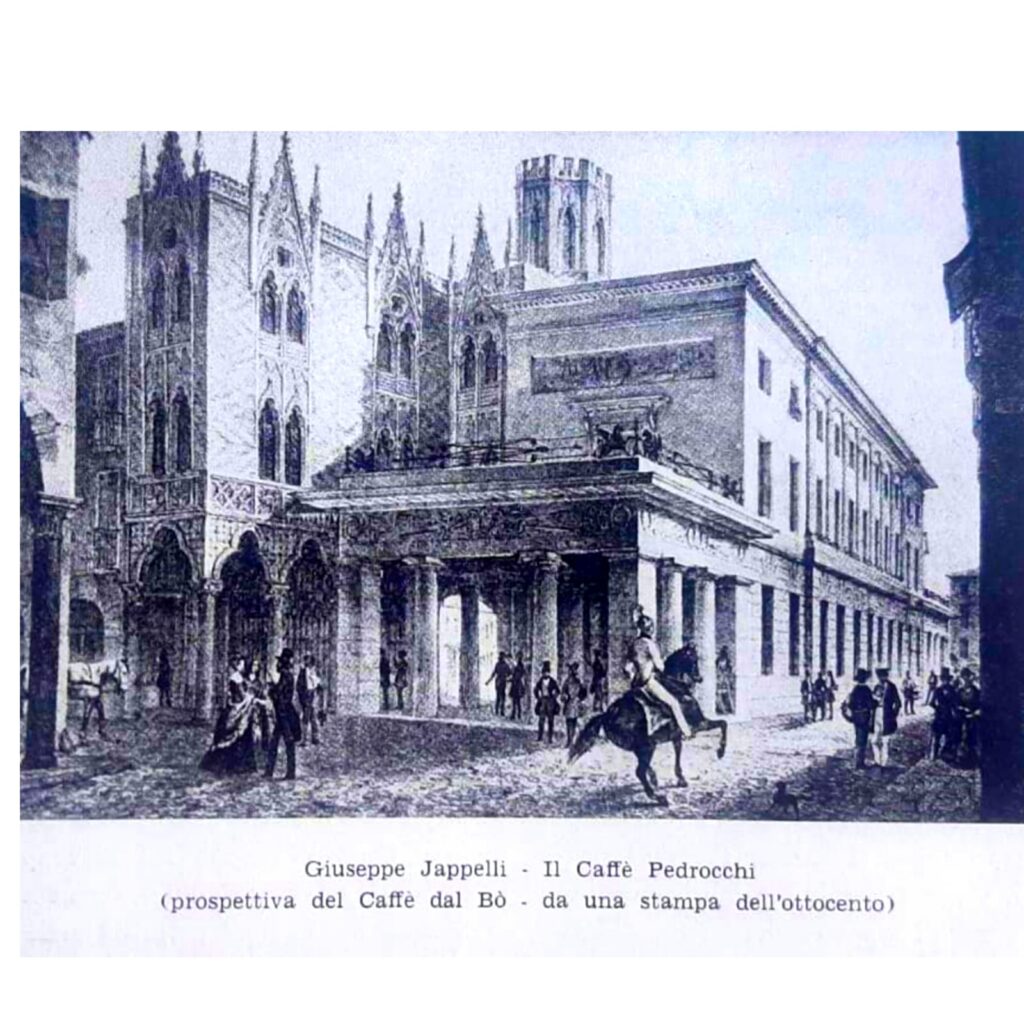
I have the honor of being a descendant of the visionary architect Giuseppe Jappelli, a Venetian master who knew how to transform the landscape with a style that blends neoclassical rigor and romantic poetry. Born in Padua, the city that hosts one of his most emblematic works — the famous Caffè Pedrocchi — I share here an immersion into some of the most beautiful Romantic Gardens in Italy. Spaces where scenic nature meets the soul of the 19th century, revealing the genius of a creator who reinvented greenery as spectacle.
Among artificial hills, mysterious grottoes, and mirrors of water reflecting the Venetian sky lies a cultural heritage little known outside of Italy: the gardens of Giuseppe Jappelli. Walking through his creations, one can feel the breath of Italian Romanticism in every curve of the path, in every strategically placed tree, in every view carefully designed to evoke emotion and contemplation. In the next few minutes, I invite you to join me on a sensory journey through the green spaces designed by one of the greatest geniuses of 19th-century Italian landscape architecture.
The Man Behind the Gardens: Giuseppe Jappelli and His Journey
Born in Venice on May 14, 1783, Giuseppe Jappelli grew up in a time of profound transformation in Europe. The youngest of nine siblings, his father, Domenico Jappelli (the same name as my grandfather), was a Bolognese who served as secretary of the Priory of the Order of Malta in Venice — a position that gave young Giuseppe early exposure to intellectual and artistic circles.
His artistic education likely began under the influence of his cousin Luigi Jappelli, a talented painter and theatrical decorator active in the Veneto region and later in Spain. After his father’s death in 1798, under the protection of his uncle Filippo, a prominent clergyman, Jappelli enrolled at the Accademia Clementina in Bologna (now the Academy of Fine Arts), where he studied architecture and sculpture, revealing a special talent for scenography.

Jappelli’s interests were not confined to the visual arts. Upon returning to Venice, he worked with the renowned cartographer Giovanni Valle, and starting in 1803, he became a land surveyor, working on water management projects along the Piave River in collaboration with hydraulic expert Paolo Artico. This multidisciplinary education — blending art, engineering, and science — would be fundamental to his revolutionary approach to garden design in the years to come.
Jappelli’s career was deeply influenced by the political events of his time. In 1807, he joined the Corps of Water and Road Engineers in the French Department of the Brenta and Upper Po, during the Napoleonic period. His admiration for Enlightenment ideals led him to join the Venetian Freemasonry in 1806, a circle that provided him with key intellectual and professional connections.
The Romantic Garden: Philosophy and Aesthetic
Before delving into Jappelli’s specific creations, it’s important to understand what defined the Romantic Garden as an aesthetic and philosophical movement. Emerging at the end of the 18th century and flourishing throughout the 19th, the Romantic Garden broke away from the rigid geometry of the French formal garden, proposing a new relationship between humans and nature.
The Italian Romantic Garden, and in particular those designed by Jappelli, can be seen as a sensitive response to Enlightenment rationalism. It was not merely a landscaping style, but a true philosophical statement on the connection between culture and nature, between order and spontaneity, between reason and emotion.
Key characteristics of Romantic Gardens include:
-
Emphasis on natural irregularity: Winding paths, organically shaped lakes, and varied topography that invite contemplative walking and gradual discovery.
-
Evocative architectural elements: Rustic bridges, artificial grottoes, scenic ruins, pavilions, and temples that suggest historical or mythological narratives, stimulating the visitor’s imagination.
-
Pictorial composition: The landscape is conceived as a sequence of “pictures” or scenes, with privileged viewpoints where every corner offers a new emotional perspective.
-
Symbolism: Use of elements rich in meaning, from specific plant species to architectural structures, conveying philosophical, esoteric, or political messages.
-
Diverse vegetation: A blend of exotic and native species arranged in compositions that simulate natural growth while being carefully planned to create contrasts of color, texture, and height.
-
Water as a vital element: Lakes, waterfalls, streams, and fountains bring movement, sound, and reflections, acting as mirrors of the sky and surrounding vegetation.
In the Italian context, these principles were adapted to local cultural traditions and the peninsula’s particular climate and topography. Jappelli interpreted these ideas with unique sensitivity, creating gardens that engaged in dialogue with Italy’s rich cultural heritage while introducing aesthetic and botanical innovations from England and France.
From Neoclassicism to Romanticism: Jappelli’s Dual Nature
🌿 A fascinating aspect of Giuseppe Jappelli’s work is the apparent duality between his public and private creations. While his architectural projects for public buildings followed the neoclassical canon — favoring order, symmetry, and rationality — his gardens fully embraced the Romantic aesthetic, exploring emotion, asymmetry, and surprise.
🌿 This duality was not a contradiction but a complementarity. The same man who designed the strict neoclassical façade of Padua’s municipal slaughterhouse (later converted into the Pietro Selvatico Institute of Art), with its Doric columns evoking the Parthenon, also crafted the vegetal labyrinths and mysterious grottoes of the Treves de’ Bonfili Park.
🌿 Perhaps the work that best symbolizes this integration of ideals is the Caffè Pedrocchi in Padua, begun in 1826 and completed in 1842. The main building, in neoclassical lines, is accompanied by the so-called “Pedrocchino,” a neo-Gothic wing. This juxtaposition of styles reflects not only the eclecticism of the era but also Jappelli’s extraordinary creative versatility, capable of moving between different architectural languages without losing coherence.
The Gardens of Padua: The Heart of Jappelli’s Art
🌿 It is in Padua, the city where Jappelli spent most of his professional life, that some of his most emblematic landscape creations are found. Already famous for its historic Botanical Garden (the oldest in the world still in its original location), the city became a true laboratory for his aesthetic experiments.
Treves de’ Bonfili Park
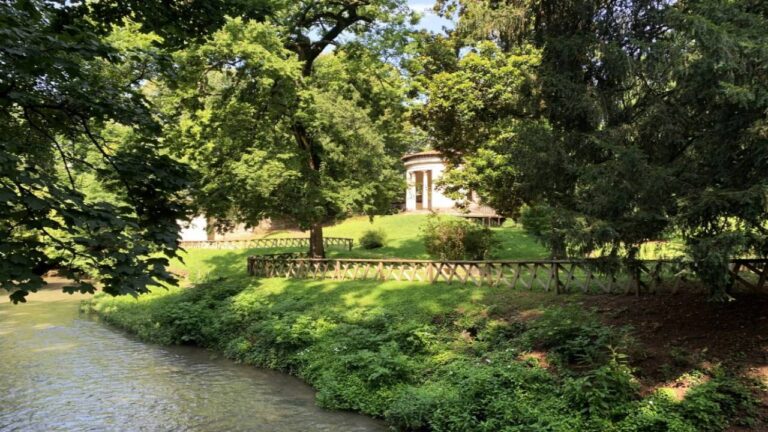
🌿 Designed between 1829 and 1835, Treves Park is considered one of the best-preserved examples of Jappellian landscape art. Covering an area of about 9,600 m², the garden was commissioned by the Treves de’ Bonfili family, a wealthy Jewish family eager for a place that reflected their social and cultural prestige.
🌿 The park contains all the typical elements of the Romantic Garden: winding paths revealing new perspectives, artificial mounds that animate the topography, a pond with a small island, and various architectural features that enrich the visual experience. Among these are a greenhouse for exotic plants and a small neoclassical temple.
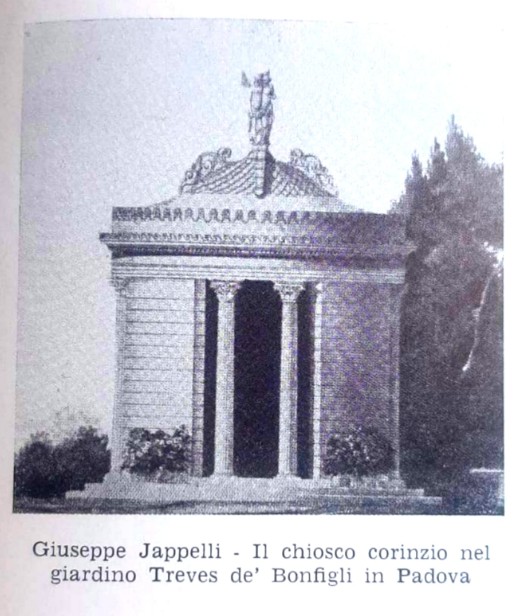
🌿 The vegetation was carefully selected to create contrasts in shape, color, and texture. Jappelli introduced monumental trees such as plane trees, cedars, and oaks, alongside exotic shrubs and flowering plants, arranged in a seemingly natural way, yet the result of meticulous planning.
🌿 After suffering severe damage over time, the park was restored in the 1990s and is now municipally owned and open to the public. The main entrance is located on Via Bartolomeo d’Alviano, and each visit offers a different experience, changing with the seasons and the play of light through the foliage.
Giacomini Romiati Garden
🌿 Designed in 1838 and located on Via del Santo, the Giacomini Romiati Garden is another precious example of Jappelli’s landscape art. This garden stands out for the skill with which the architect was able to integrate greenery with pre-existing architecture, creating a harmonious dialogue between nature and built structures. The apse of the Church of San Francesco provides a scenic backdrop, as does the nearby tower.
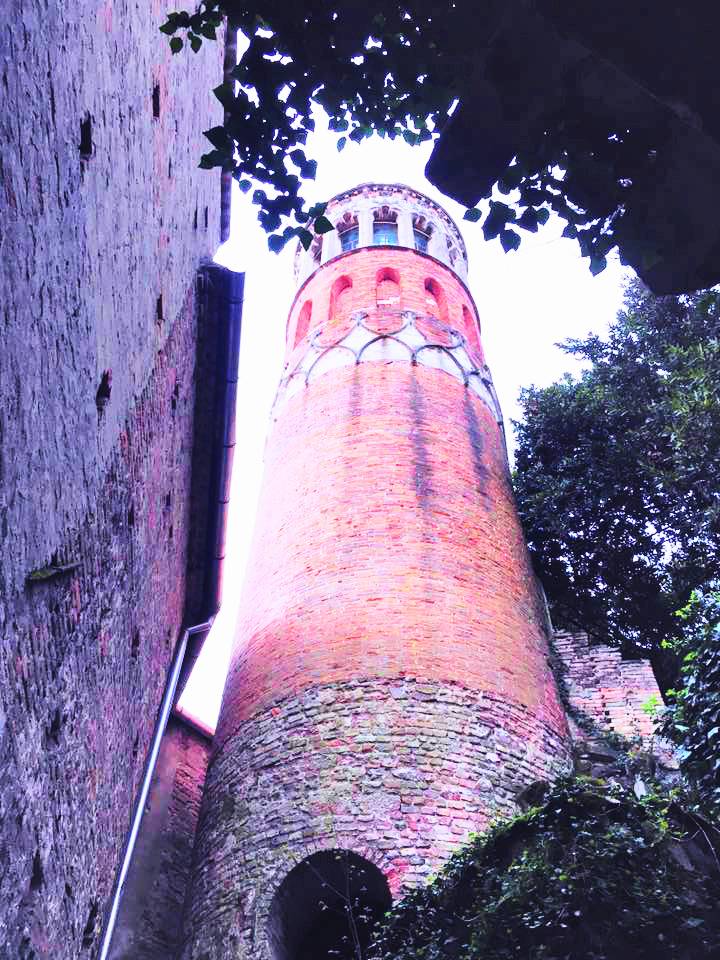
🌿 Smaller than Parco Treves, the Giacomini Romiati Garden concentrates a surprising variety of environments and atmospheres in a compact space. Jappelli used elements such as pergolas, fountains, and strategically placed benches to create intimate and contemplative corners.
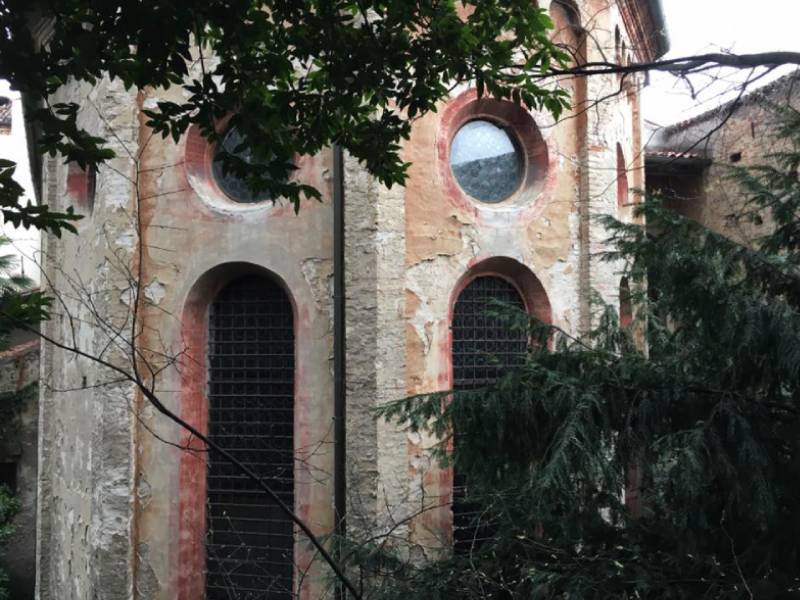
🌿 The plant composition includes rare ornamental species, shade trees, and aromatic plants, arranged to create a sensory path capable of stimulating all the senses. This garden is a prime example of Jappelli’s skill in transforming limited urban spaces into oases of tranquility and beauty.
Giardini Pacchierotti
🌿 Dating back to 1840, these gardens are located between the Botanical Garden and Prato della Valle, representing the stylistic maturity of Jappelli. The Pacchierotti Gardens host a remarkable botanical variety, with centuries-old trees, ornamental shrubs, and blooms that create a living mosaic of colors and textures.
🌿 A distinctive feature of this garden is the masterful use of water: canals, small waterfalls, and a central lake reflecting the sky and surrounding vegetation. Architectural structures include an orangery, rest pavilions, and rustic bridges connecting the different areas of the park.
🌿 Of particular interest is the artificial hill built by Jappelli, serving both as a privileged scenic viewpoint and as a scenic element that enlivens the entire landscape.
Oratory and Garden of the Libera
🌿 Completed in 1821 in the locality of Volta Brusegana, this project, although more modest in scale, is significant for understanding Jappelli’s versatility and his ability to harmoniously blend sacred space with the natural landscape.
🌿 The oratory, with its sober neoclassical lines, is accompanied by a garden that, though small, features a carefully studied composition. The vegetation, mostly native, creates an intimate and contemplative environment that perfectly aligns with the spiritual function of the place.
🌿 This work demonstrates how Jappelli was able to adapt his aesthetic principles to the most diverse contexts while maintaining the coherence of his artistic vision.
Beyond Padua: Jappelli’s Mark Across the Veneto
🌿 Jappelli’s influence extended well beyond the boundaries of Padua, leaving a significant imprint in various cities of the Veneto and other regions of Italy. These projects demonstrate his ability to adapt the landscape style to different geographic and cultural settings.
Villa Valmarana in Saonara
🌿 Begun in 1816, the garden of Villa Valmarana (also known as Cittadella Vigodarzere) in Saonara, in the province of Padua, is one of Jappelli’s earliest major landscape interventions. The project was commissioned by Andrea Vigodarzere, an aristocrat with whom Jappelli shared cultural interests and political ideals.
🌿 The Saonara garden already reflects a full assimilation of the principles of the English-style romantic garden, though reinterpreted in a personal way. Among its symbolic elements, the famous “Templars’ grotto” stands out — a reference to Freemasonry, of which both the architect and the patron were members.
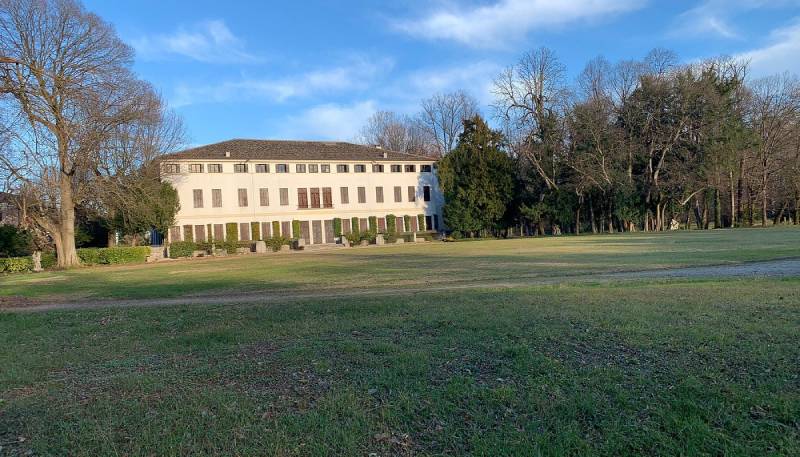
🌿 The vegetation was designed with botanical precision and aesthetic sensitivity, creating a succession of natural scenes that change constantly along the path. Particularly interesting is the use of conifers and evergreens, which ensure a consistent visual impact throughout the year.
🌿 This garden, still well-preserved today, represents one of the oldest and most complete examples of Jappelli’s landscape art, containing a repertoire of themes and solutions that would later be developed in the architect’s more mature projects.
Villa Gallarati Scotti
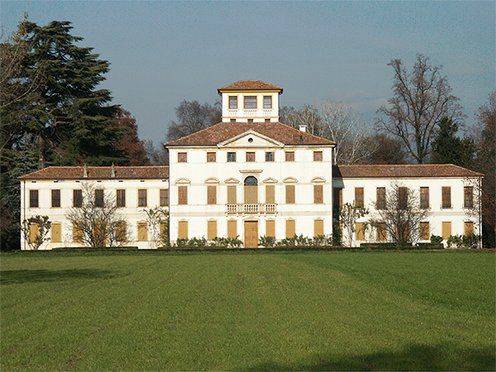
Located in Fontaniva, in the province of Padua, this is one of the most remarkable historic properties in the Veneto region. Formerly known as Ca’ Orsato and Villa Cittadella Vigodarzere, its origins date back to the early 16th century. Over the centuries, the villa underwent numerous transformations, including the construction of a magnificent English-style garden attributed to Giuseppe Jappelli, the renowned Venetian architect and engineer of the 19th century.
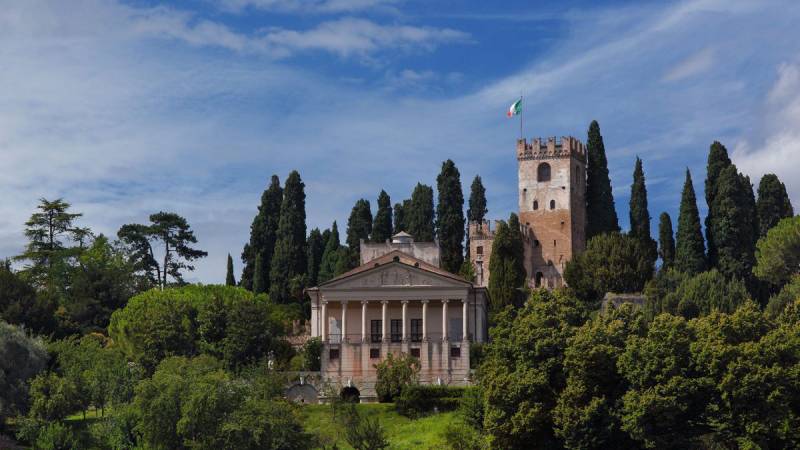
The garden develops across different levels, making the most of the natural topography of the hill. Jappelli created a system of terraces and gentle ramps that guide the visitor through a sequence of environments, each with its own unique character. The vegetation includes majestic cypresses, which establish a dialogue with the Tuscan landscape tradition, as well as fruit trees and ornamental species.
A distinctive feature of this project is the integration between productive and ornamental spaces. Jappelli successfully incorporated vineyard and orchard areas into the landscape design, turning functional elements into aesthetic components of the complex.
Villa Ca’ Minotto in Rosà
Dating back to 1832, this estate in the province of Vicenza showcases Jappelli’s ability to work with large spaces in rural contexts. The garden extends across a vast area, creating a gradual transition between the built environment of the villa and the surrounding agricultural landscape.
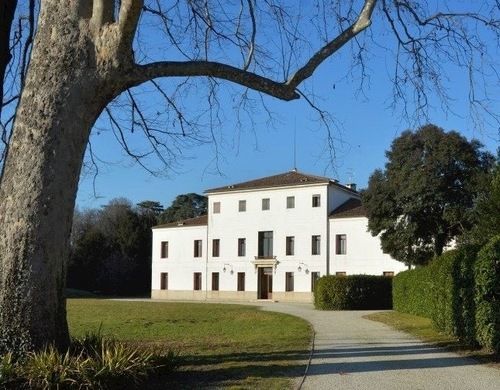
The composition includes a large artificial lake with naturalistic contours, rustic bridges, planned groves, and clearings that open up unexpectedly, offering carefully framed views. The vegetation blends native species with exotic specimens, creating intriguing contrasts in shape and texture. The villa and its garden exemplify the new ideal of rural residence emerging in the 19th century: no longer merely a center of agricultural production, but a space of aesthetic enjoyment and cultural experience, integrated with nature.
Villa de Manzoni ai Patt in Sedico
Completed in 1835 in the province of Belluno, this villa and its garden reflect the artistic maturity of Jappelli. The project features an elegant neoclassical structure that harmonizes with a park bearing romantic characteristics.
The garden of Villa de Manzoni stands out for its masterful use of the surrounding mountain landscape. Jappelli created strategic observation points from which visitors can admire the Dolomite mountains in the background, thereby incorporating the natural panorama as a compositional element of the garden.
The vegetation was chosen with the colder climate of this mountainous region in mind, with a prevalence of conifers and hardy species. Particularly notable is the arrangement of tree masses that create plays of light and shadow, framing specific views and establishing different atmospheres along the path.
Villa Soranzo Conestabile in Scorzè
Expanded by Jappelli in 1838, this villa in the province of Venice is an interesting example of his approach to working with pre-existing historic properties. The architect extended the southern wing of the villa and created an English-style garden that complements the architecture.
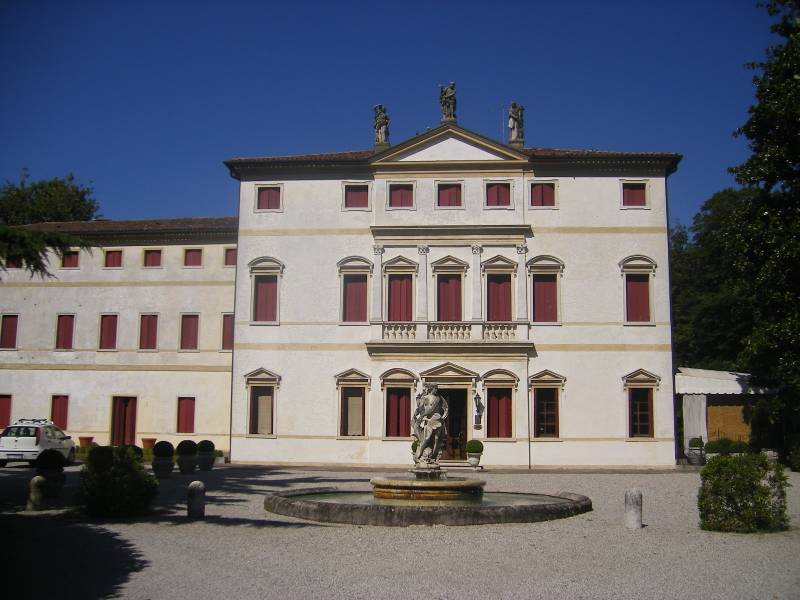
The landscape design incorporates water features, such as canals and small lakes, evoking the Venetian tradition. The vegetation includes monumental trees, flowering shrubs, and aquatic plants, creating a microcosm that reflects the botanical diversity of the Veneto. This garden demonstrates Jappelli’s ability to adapt the Romantic language to specific contexts, while respecting the cultural and geographical identity of each location.
The Roman Experience: Villa Torlonia
Jappelli’s fame as a landscape architect extended beyond the Veneto region, reaching Rome, where he was invited by Prince Alessandro Torlonia to work on the gardens of his villa on Via Nomentana. Developed between 1835 and 1840, this project posed a unique challenge, requiring Jappelli to adapt his northern sensibility to the climate and culture of central Italy.
The villa’s original core, designed by Giuseppe Valadier between 1802 and 1806, followed classical formal principles. Jappelli added a Romantic-style garden to the southern portion of the property, creating a stylistic contrast that enriched the visitor’s experience.
Among his creations were the Serra Moresca (a greenhouse inspired by Islamic architecture), the Torre (a polychrome structure in iron and glass inspired by the Alhambra in Granada), the Capanna Svizzera (a rustic hut later transformed into the Casina delle Civette), and the spectacular Grotta, unfortunately mostly destroyed, which once included gypsum stalactites and stalagmites and suspended bridges.
Despite the challenges, his contributions to Villa Torlonia remain a significant example of adapting the Romantic garden style to the Mediterranean context, incorporating references to classical Italian tradition as well as Islamic cultural elements that fascinated the European elite of the era.
Technical Innovations: The Ingenuity of Jappelli
One of the most impressive aspects of Jappelli’s gardens is the technical sophistication behind their seemingly natural appearance. The architect applied his knowledge of hydraulic engineering, mechanics, and topography to create striking effects and solve complex technical challenges.
In his gardens, water is never merely decorative but a dynamic element that brings the space to life. Jappelli designed intricate hydraulic systems to power fountains, operate small waterfalls, and maintain steady lake levels—often utilizing the land’s natural slope to create gravity-driven pressure.
Particularly ingenious was a now-lost mechanism he created for the Torre of Villa Torlonia, where a lavishly set table would magically appear, delighting the guests. This kind of device, combining practical utility with theatrical surprise, was characteristic of Jappelli’s approach, which saw the garden as a space for both contemplation and entertainment.
His technical mastery also extended to the shaping of the terrain, creating artificial hills, grottos, and valleys that appeared completely natural, yet were carefully planned and executed. The distribution of vegetation reveals deep botanical knowledge, considering not only aesthetic effect but also each species’ specific needs and adaptability to the local microclimate.
Jappelli’s Legacy: Conservation and Contemporary Relevance
The legacy of Giuseppe Jappelli is a cultural treasure that deserves preservation and recognition. His gardens are not just historical monuments, but living spaces that continue to evolve and provide meaningful experiences for visitors.
Today, many of the gardens he designed are open to the public, such as Parco Treves in Padua, allowing new generations to engage with his artistic vision. Others remain in private ownership but can be visited during special events or by appointment.
🌿 The conservation of these spaces poses significant challenges. Historic gardens are complex ecosystems that require continuous and specialized maintenance. Centuries-old trees reach the end of their life cycle, ancient hydraulic systems deteriorate, and climate change affects the botanical balance. Restoring a historic garden requires interdisciplinary expertise, bringing together art history, landscape architecture, botany, and engineering.
🌱 Fortunately, the last few decades have seen a renewed interest in Italy’s historic gardens, leading to major restoration projects such as that of Parco Treves in the 1990s. These efforts are essential not only to preserve Jappelli’s work but also to safeguard an entire landscape tradition that forms a vital part of Italy’s cultural identity.

 ✍️ Idealizadora e autora do Verament...