

Where the Heart Makes Its Home – An Italy of Affection and Traditions
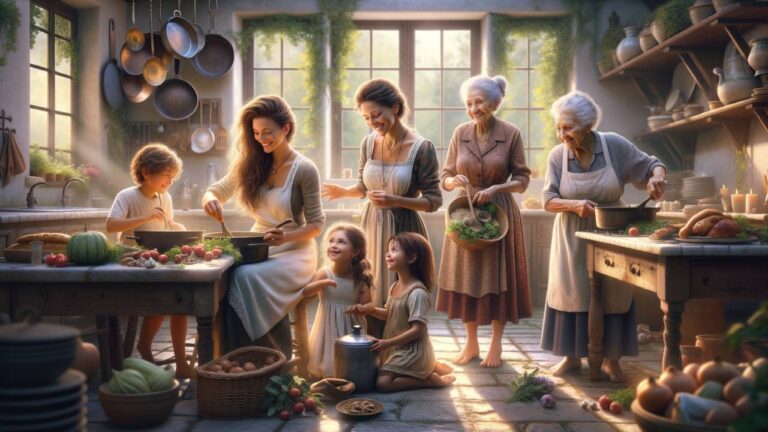
Imagine for a moment the Tuscan sun warming a rustic kitchen, the aroma of ragù simmering slowly on the stove, an old melody escaping the lips of someone kneading bread. Or picture a lively piazza in the South, where children run under the watchful and loving gaze of their grandmothers, guardians of secrets and games. This Italy, woven from affection, flavors, and bonds that time only strengthens, is the Italy that many of us carry in our hearts, even if only in dreams.
When thinking of Italy, it’s almost impossible not to evoke the powerful and central image of women, especially the mamma and the nonna. They are more than family members; they are institutions, pillars upon which much of Italian identity and culture are built. But does this prominence constitute a type of Italian “matriarchy,” a feminine power that defines daily life?
Although the term “matriarchy,” in the sense of women formally governing society, doesn’t directly apply to Italian history, there is an undeniable and deeply rooted feminine strength. This text doesn’t seek academic formalities but rather aims to dive into the “matriarchal soul” of Italy – that powerful and tender influence mãeating from mothers and grandmothers. We want to explore how their presence, their gestures, and the values they transmit with such care not only sustain traditions and affection but also shape the essence of being Italian. It’s an invitation to feel, more than to analyze, how this power of the heart defines the beauty of Italian life.
Understanding the Essential: Feminine Power, Italian Style
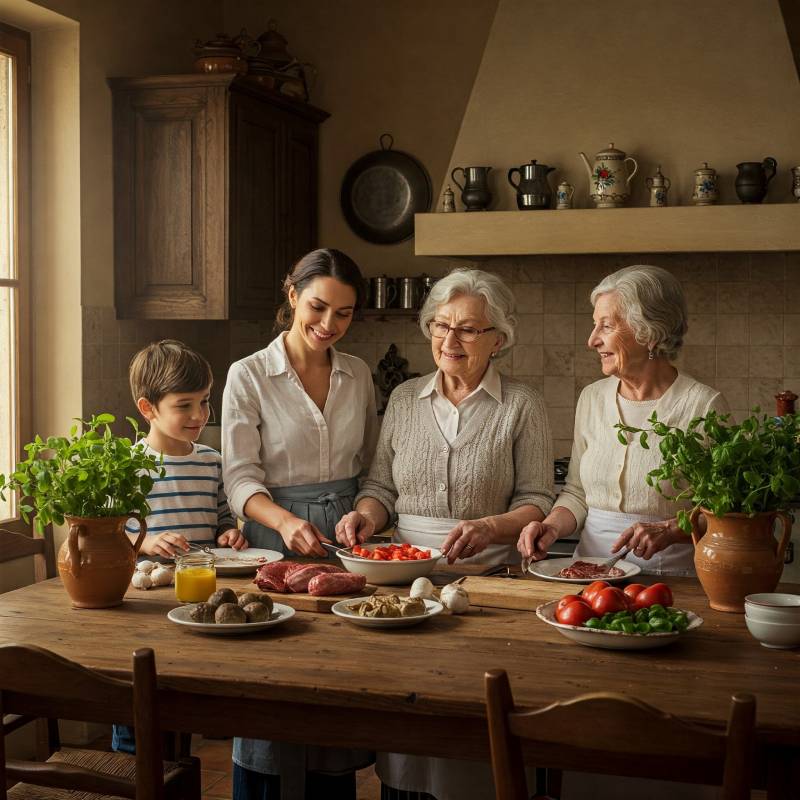
Before we delight in the stories and traditions, it’s worth a brief pause to understand the special flavor of feminine influence in Italy.
Matriarchy? Not so much. As we said, the idea of women in charge of everything, politically and socially, isn’t quite the picture of Italy. Historically, laws and formal structures gave more power to men.
The focus is on the Mother: Matrifocality. This is where the conversation gets interesting! If the mother is the center of family life, organizing the home, nurturing everyone (literally and emotionally), and being the point of reference for her children, we call this matrifocality. And in this, Italy is a champion! The mamma may not have formal power, but within the home, her influence is immense. It’s a kind of “reign of the hearth,” where love and care are the most important laws.
This centrality of the mother and grandmother is what we’ll call the “matriarchal soul” – a power that doesn’t need decrees, as it manifests in daily life, in affection, and in the strength with which they keep the family united and traditions alive.
“La Mamma è Sempre La Mamma”: The Heart of the Italian Family
In Italy, saying “La mamma è sempre la mamma” is like chanting a sacred mantra. It means that the mother is irreplaceable, the safe harbor, the moral and emotional compass of any self-respecting Italian. She is the sun around which the family orbits.
A Love that Impresses: The Figure of the Mamma
The Italian mamma is an almost mythical figure. Shrouded in an aura of unconditional love and sacrifice, she is the pillar of the family. Think of that classic image of the Italian mother with open arms, ready to welcome, defend, and, of course, feed her offspring with a passion that overflows from the plate. This reverence has deep roots, including in the strong Catholic tradition and the figure of the Virgin Mary, La Madonna, an example of maternal devotion.
Within the home, her authority is natural, earned through affection and dedication. She is usually the one who wisely manages the household budget, who knows each child like the back of her hand, and who always has the right words – whether it’s advice, comfort, or that timely scolding, always thinking of the family’s well-being. Even today, with so many mamme working outside the home, this essence of being the “heart of the family” remains incredibly strong.
Guardian of Family Treasures: Traditions, Values, and the Magic of the Kitchen
If the Italian family has treasures, the mamma is its most faithful guardian. And what are these treasures?
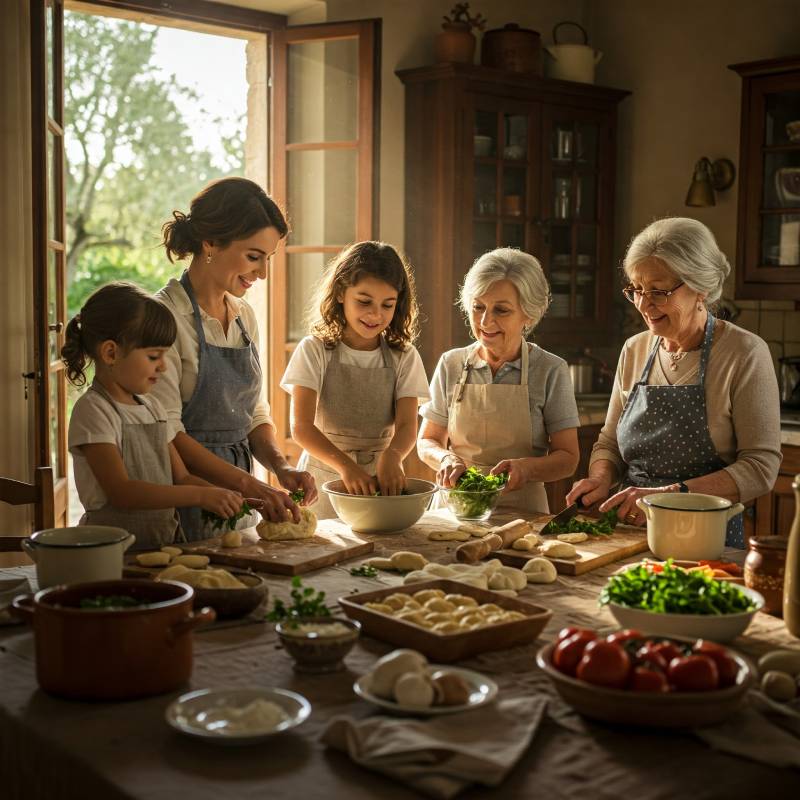
The Magical Kitchen: Ah, the mamma’s kitchen! That’s where the magic happens. She doesn’t just cook; she celebrates life in every dish. Recipes passed down through generations – that special sauce whose secret no one reveals, fresh pasta made by hand, cookies that only she knows how to make – are more than food: they are heritage, they are love in food form. Sunday lunch, prepared by her, is a sacred ritual, a feast that gathers everyone around the table. Curiosity: Did you know that many Italian mamme have their own tricks and variations for classic dishes? An extra pinch of this, a different cooking time for that… and the result is always unique and delicious!
Values that Last: More than nourishing the body, the mamma nourishes the soul. It is she who teaches, from an early age, respect for elders, the importance of honesty, family unity, and faith (for many families). These are lessons learned not through sermons, but by daily example, in the way she treats others and conducts her own life.
Feasts and Rituals: The mamma is often the conductor of family celebrations. From Christmas to Easter, from birthdays to baptisms, she is the one who ensures traditions are maintained, that the house is welcoming, and that everyone feels part of something special.
It’s easy to understand why the mamma is so central. She is the glue that unites the family, the flame that keeps traditions alive, and the love that nurtures everyone.
The “Mamma’s Boy”: A Special Bond
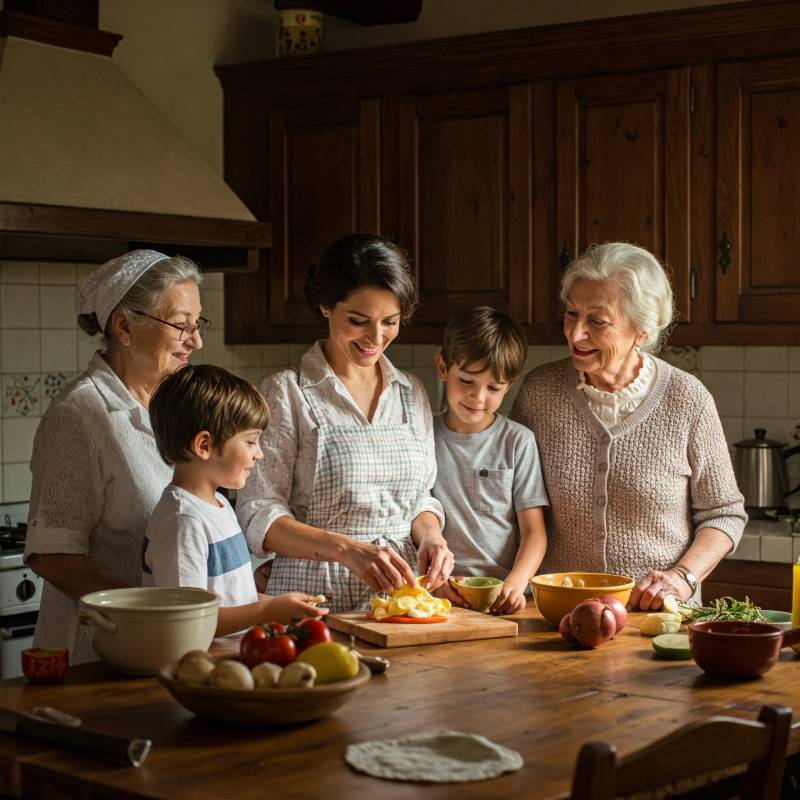
Who hasn’t heard of Italian “mammismo”? That super strong bond, especially between mothers and sons, which causes many young men to take a little longer to leave home? It’s a cultural phenomenon that yields many stories and, sometimes, a few jokes.
The reasons are many:
- The comfort of the maternal home, with its special meals and care.
- The difficulty of finding stable jobs and affordable housing for young people.
- And, of course, the fact that, for the Italian mamma, her children are always her “bambini”, no matter their age!
Although sometimes criticized for supposedly “delaying” children’s independence, mammismo also reflects how deep the love and centrality of the mother figure are in Italian culture. It’s a bond that, deep down, speaks of great affection and security.
Today’s Mamma: Between Tradition and Modernity
Today’s Italian mamma is not the same as she was 50 years ago. She has gone to university, carved out her space in the job market, and has her own dreams and ambitions. But, even with all these changes, love for her family and the desire to be a good mother remain priorities.
The challenge for the modern mamma is to balance everything: career, children, home, and, perhaps, a little time for herself. Often, she ends up on a true triple journey! Still, the strength and resilience of Italian women are shown in their ability to adapt, to continue being the pillar of the family while blazing new trails. And, often, she relies on a powerful ally in this journey: the nonna.
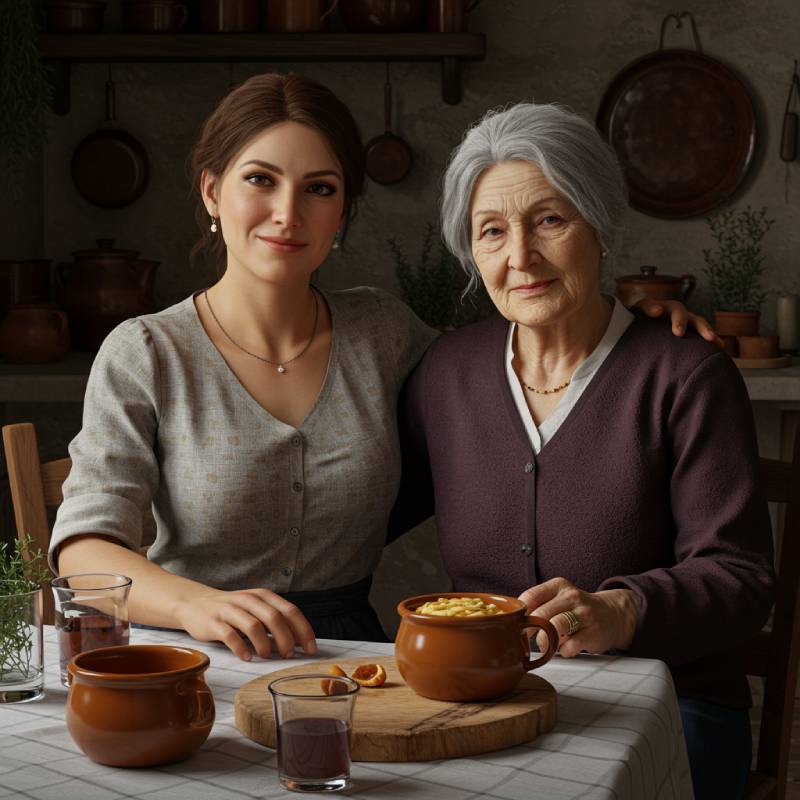
The Sweetness of Wisdom: The Nonna and Her Legacy of Love
If the mamma is the heart, the nonna (grandmother) is the wise soul of the Italian family. She is the guardian of the oldest memories, the storyteller, the personification of continuity and affection that spans generations.
A Lap that Soothes, Hands that Help
Italian nonne are famous for their unconditional love and limitless dedication. They are the safe refuge, the hug that heals any sadness, and the hands that are always ready to help.
Super Nannies: In many Italian families, grandmothers are the primary caregivers for grandchildren, especially when parents work outside the home. And they do it with admirable joy and patience! It’s a beautiful exchange: the grandchildren receive abundant love and attention, and the nonne feel useful, loved, and rejuvenated by the company of the younger ones.
Wisdom that Transcends: The stories and life lessons from nonne carry unique weight. It is from them that many family traditions, recipes, and rituals come. Even when technology seems to dominate, nonne continue with their stories and wisdom, showing that the past is a treasure of incomparable value.
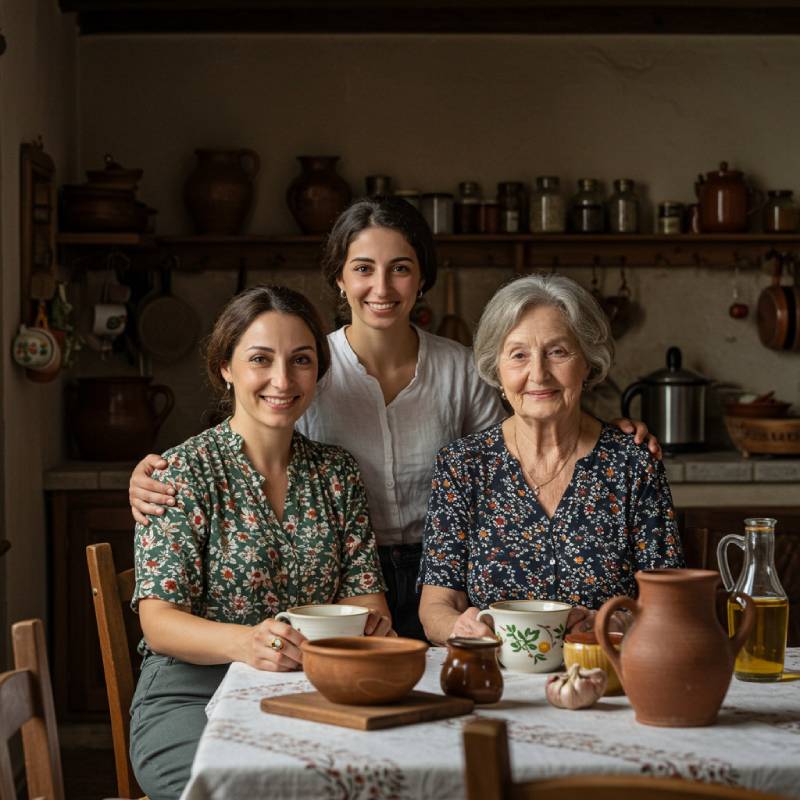
Conclusion: Celebrating the Mamma and Nonna – Pillar of a Country, Soul of a Culture
In Italy, being a mother or grandmother isn’t just a role. It’s a vocation that transcends generations, a subtle force that defines family life, nourishes culture, and carries with it a profound emotional and historical baggage. Italian mamme and nonne are much more than family figures: they are the heart and soul of Italy.
Through their hands, their eyes, the warmth of their kitchens, they teach us that the true essence of Italian life lies in small gestures of love, in dishes made with care, in conversations around the table. After all, what is Italy if not a celebration of love in its purest and most lasting form?
And now, tell me: what is your fondest memory involving a mother figure or a grandmother, whether Italian or not? Share your story in the comments! We’d love to know how this “matriarchal soul” manifests in your life.

 ✍️ Idealizadora e autora do Verament...