

Giotto is often called “the first Renaissance painter,” even though he lived before the Renaissance proper. He was a bridge between medieval art, rigid and symbolic, and Renaissance art, focused on realism and emotional expression.
Giotto revolutionized painting by introducing a sense of depth and volume in his figures, something almost nonexistent in the art of his time. He painted people who looked real, with genuine emotions and bodies that occupied space in a three-dimensional world.
Works that Defined his Genius
Frescoes of the Scrovegni Chapel (Padua, 1303-1305): This series of frescoes is considered one of the greatest achievements of Western art. Giotto depicted scenes from the life of Christ and the Virgin Mary with an emotional intensity never seen before. In “The Lamentation of Christ,” for example, the figures weep and writhe in pain in a way that feels almost palpable.
Basilica of Santa Croce (Florence): Here, Giotto painted frescoes that showcase his ability to create the illusion of space and volume. His figures seem to interact with each other and the environment, something rare in medieval art.

Giotto’s Innovation
Giotto paved the way for the Renaissance by showing that art could be more than symbolic representation; it could be a window into human experience. He inspired generations of artists to explore realism and depth, setting the stage for figures like Masaccio and Michelangelo.
Filippo Brunelleschi (1377-1446): The Architect Who Challenged the Sky
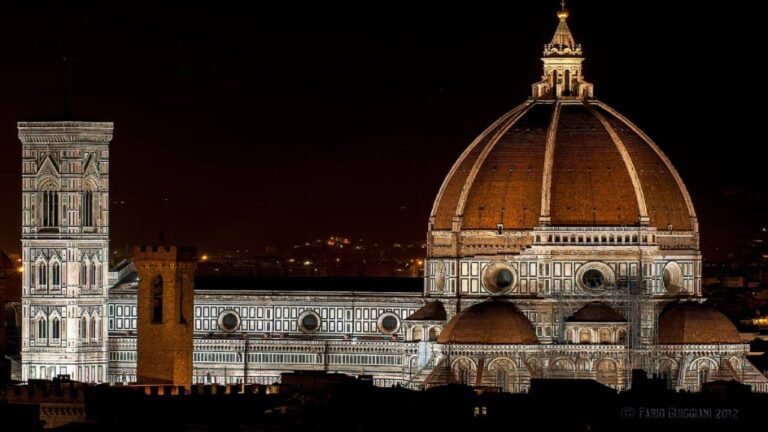
Brunelleschi was one of the greatest architects in history, a man whose vision and technical ingenuity transformed the landscape of Florence and, by extension, the world. He is best known for his masterpiece: the dome of the Cathedral of Santa Maria del Fiore, the Duomo of Florence.
But Brunelleschi was more than an architect; he was an inventor and a pioneer of linear perspective, a technique that revolutionized painting by creating the illusion of depth on flat surfaces.
Works that Defined his Genius
The Dome of the Florence Cathedral (1418-1436): Building such a large dome without traditional scaffolding seemed impossible, but Brunelleschi found an ingenious solution. He created a double-shell structure, with an inner and outer dome, connected by support ribs. The result was a work of art that still dominates Florence’s skyline today.
Basilica of San Lorenzo: This building is a classic example of Renaissance architecture, with its harmonious proportions and use of perspective. Brunelleschi designed the church based on mathematical principles, creating a space that feels perfect in its simplicity and elegance.
Brunelleschi’s Innovation
Brunelleschi not only transformed architecture; he changed how people saw the world. His dome was a symbol of human power to overcome seemingly insurmountable challenges, while his linear perspective opened new possibilities for painting and visual representation.

Donatello (1386-1466): The Sculptor Who Brought Marble and Bronze to Life
Donatello was a master sculptor, known for his ability to create works that combined realism and emotional expression. He worked with a variety of materials, from marble to bronze, and explored themes ranging from the religious to the mythological.
Works that Defined his Genius
David in Bronze (1440): This was the first freestanding nude statue since antiquity. Donatello portrayed David as a fragile yet confident young man, holding Goliath’s sword. The work is a symbol of the triumph of reason and virtue over brutality.
Saint George (1417): This sculpture, created for the church of Orsanmichele, captures the determination and courage of the saint. The facial expression and armor details showcase Donatello’s skill in portraying humanity in his figures.
Donatello’s Innovation
Donatello revolutionized sculpture by introducing unprecedented realism and emotional depth, profoundly influencing Renaissance art. His ability to capture human essence and work with diverse materials made him a pioneer in the field of sculpture.
Sandro Botticelli (1445-1510): The Poet of Painting
Botticelli is famous for his mythological and allegorical paintings, which combine aesthetic beauty with deep symbolic meanings. He was one of the first artists to revive themes from classical mythology, creating works that are both poetic and visually stunning.
Works that Defined his Genius
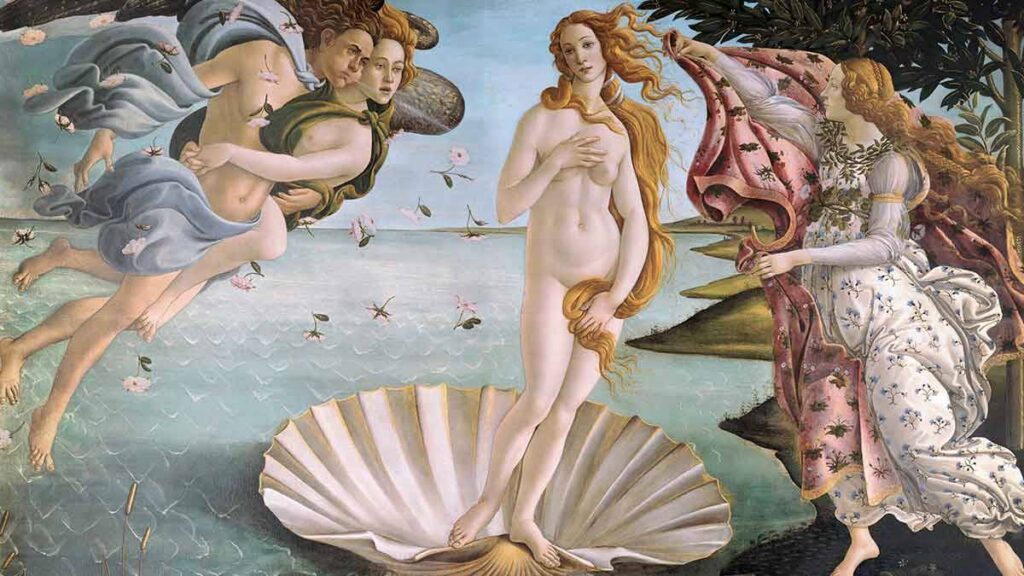
The Birth of Venus (1484-1486): This iconic painting depicts the goddess Venus emerging from the sea, symbolizing the rebirth of classical culture. The composition, soft colors, and serene expression of Venus make this one of the most beautiful works of the Renaissance.
Primavera (1477-1482): This complex and richly symbolic painting represents the arrival of spring and the blossoming of life. Each figure in the painting has a specific meaning, from the Three Graces to Mercury, creating a visual narrative that invites contemplation.
Botticelli’s Innovation
Botticelli brought a new dimension to painting, uniting mythological themes with a unique and poetic aesthetic. His works, rich in symbolism and beauty, opened new paths for Renaissance art, influencing generations of artists.
Leonardo da Vinci (1452-1519): The Universal Genius
Leonardo da Vinci was not just an artist; he was one of the greatest geniuses in human history, a man whose insatiable curiosity and unparalleled talent made him a symbol of the Renaissance. Born in Vinci, a small Tuscan town, Leonardo moved to Florence at a young age, where he began his apprenticeship in Andrea del Verrocchio‘s workshop. It was there that he learned not only to paint but also to observe the world with the eyes of a scientist, merging art and science in a way no one had done before.
Leonardo was a true polymath: painter, sculptor, architect, engineer, inventor, anatomist, musician, and philosopher. His brilliant mind saw connections where others saw only separation. He studied the flight of birds to understand aerodynamics, dissected corpses to comprehend human anatomy, and observed light and shadow to create paintings that seemed to breathe.
Works that Defined his Genius
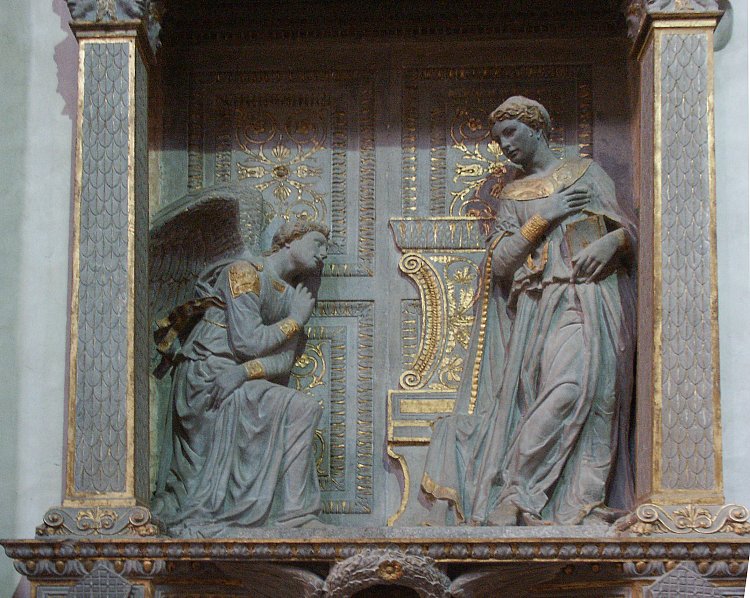
The Annunciation (1472-1475): One of his earliest works, painted while still an apprentice in Verrocchio’s workshop, already shows his mastery of perspective and light. The angel Gabriel and the Virgin Mary are portrayed with a serenity and realism that transcend the spiritual, almost as if they were alive.
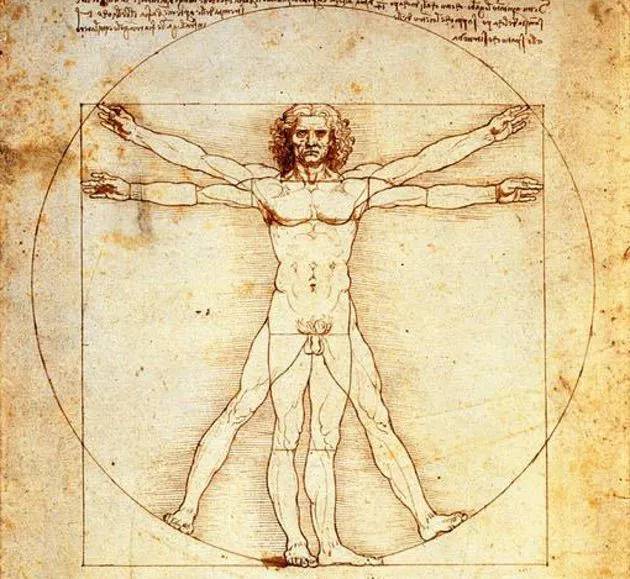
Vitruvian Man (1490): This iconic drawing is much more than a representation of human proportions; it is a symbol of the harmony between man and the universe. Leonardo based it on the studies of the Roman architect Vitruvius, creating an image that fuses art, mathematics, and philosophy, embodying the Renaissance ideal of balance and perfection.
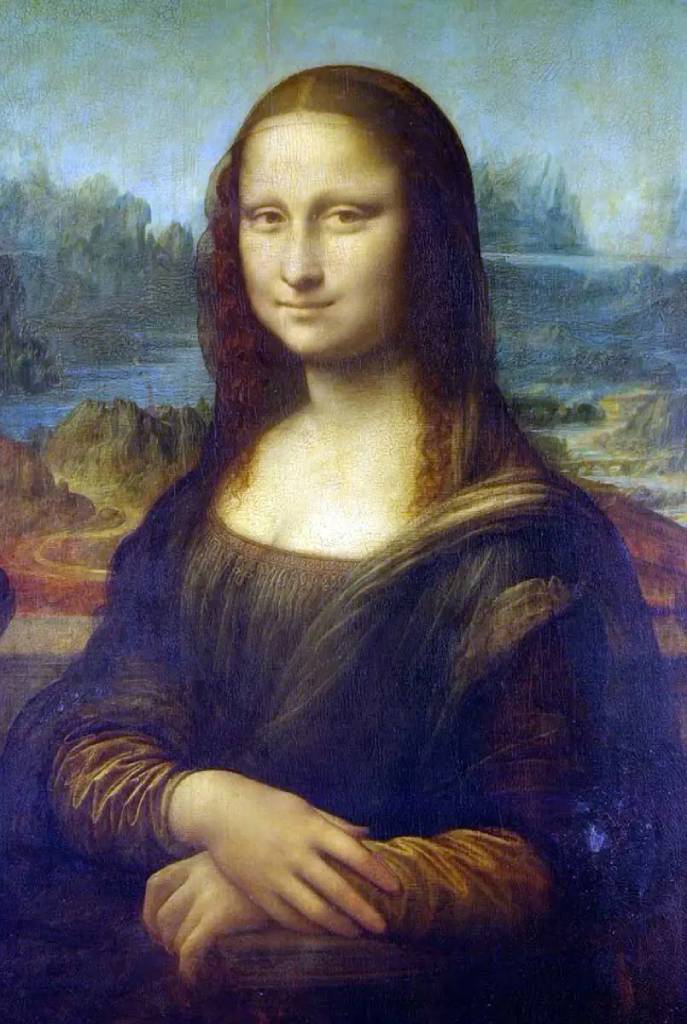
Mona Lisa (1503-1506): Perhaps the most famous artwork in the world, the Mona Lisa is a mystery that continues to fascinate. Her enigmatic smile, the masterful use of sfumato (shading technique), and the surreal landscape background create an atmosphere that feels alive. Leonardo worked on this painting for years, carrying it with him until his death, as if in an endless quest for perfection.
The Last Supper (1495-1498): Painted in the refectory of the Santa Maria delle Grazie convent in Milan, this work captures the dramatic moment when Jesus announces that one of his disciples will betray him. The composition, facial expressions, and use of perspective are so powerful that the viewer feels part of the scene.
Leonardo’s Innovation
Leonardo da Vinci was much more than an artist; he was a visionary whose ideas were centuries ahead of his time. His notebooks, filled with sketches of inventions like flying machines, tanks, and hydraulic devices, show a mind that never stopped exploring. He saw art as a way to understand the world and the world as an endless source of inspiration for art.
His ability to unite art and science, to observe nature with the eyes of a scientist and translate those observations into artworks, made him an unparalleled innovator. Leonardo taught us that true genius lies in the ability to see the extraordinary in the ordinary and to transform knowledge into beauty.
Michelangelo Buonarroti (1475-1564): The Giant of the Renaissance
Michelangelo was one of the greatest geniuses in art history, a man whose talent spanned sculpture, painting, and architecture. He was known for his intensity and perfectionism, and his works are a testament to his relentless pursuit of perfection.
Works that Defined his Genius
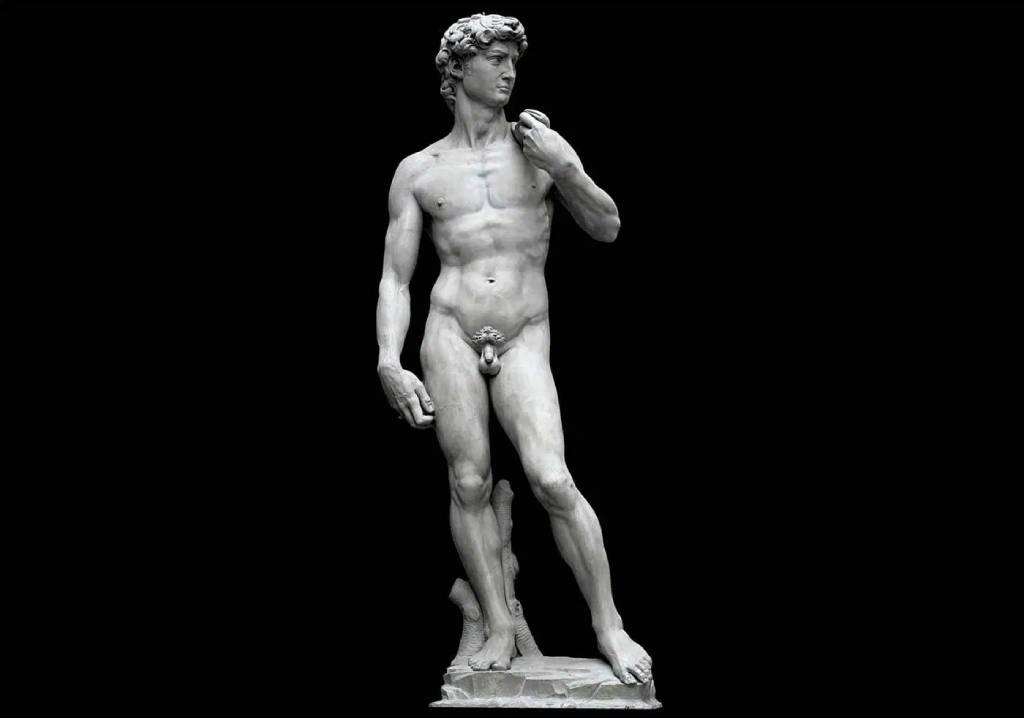
David (1501-1504): This monumental sculpture represents the ideal of human beauty and perfection. Michelangelo captured the exact moment before David faces Goliath, creating a work that is both physically and emotionally powerful.
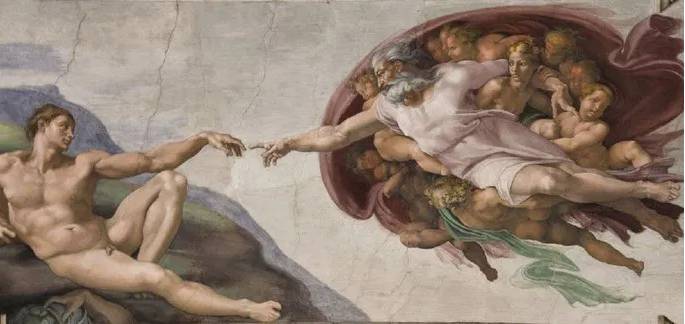
Sistine Chapel Frescoes (1508-1512): Paintings like “The Creation of Adam” and “The Last Judgment” are considered masterpieces of Western art. Michelangelo worked alone, lying on his back on scaffolding, to create these images that seem to transcend the human and reach the divine.
Michelangelo’s Innovation
Michelangelo elevated art to an unprecedented level, exploring themes like spirituality, humanity, and perfection. His mastery in sculpture, painting, and architecture made him a symbol of the Renaissance, and his innovative approach continues to inspire artists worldwide.
The Characteristics of Florentine Renaissance Art
Linear Perspective
Linear perspective, developed by Brunelleschi, allowed artists to create the illusion of depth in their works, giving a sense of realism and three-dimensionality.
Humanism
Renaissance art placed the human being at the center of representations, celebrating beauty, intelligence, and human emotions.
Study of Anatomy
Artists like Leonardo da Vinci and Michelangelo studied human anatomy in detail, allowing for more precise and realistic representations of the body.
Use of Light and Shadow (Chiaroscuro)
The chiaroscuro technique was widely used to create volume and dramatic effects in paintings.
Classical and Mythological Themes
The Renaissance revived themes from Greek and Roman mythology, combining them with Christian and contemporary elements.
The Legacy of the Florentine Renaissance
The Florentine Renaissance not only transformed art but also influenced science, politics, and philosophy. It laid the foundations for modern thought, valuing reason, observation, and creativity.
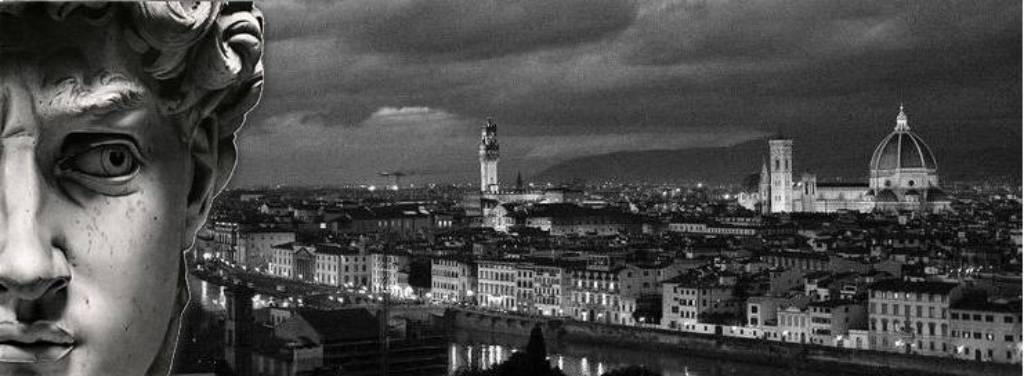
Today, Florence remains an open-air museum, where masterpieces such as Michelangelo’s David, Giotto’s frescoes, and Donatello’s sculptures can be admired. The city is a living testament to the power of art and culture in transforming the world.
Art as a Reflection of Humanity
The Florentine Renaissance was a unique period in history, where art, science, and humanism came together to create a legacy that continues to inspire us today. Florence, with its visionary artists and generous patrons, was at the heart of this revolution, proving that creativity and innovation can change the world.
Have you ever visited Florence or been inspired by Renaissance art? Share your experiences in the comments and continue exploring the fascinating world of the Italian Renaissance.
Links
Uffizi Gallery (Florence): Official Uffizi Gallery Website
The Uffizi Gallery houses some of the most important works of the Renaissance, such as Botticelli’s “The Birth of Venus” and Leonardo da Vinci’s “The Annunciation.”
Accademia di Belle Arti di Firenze (Florence Academy of Fine Arts): Official Academy Website
The museum is famous for housing Michelangelo’s David, one of the most iconic sculptures of the Renaissance.
Cathedral of Santa Maria del Fiore (Florence Duomo): Official Duomo Website
Brunelleschi’s dome is a landmark of Renaissance architecture and one of the greatest engineering achievements of its time.
Medici Chapel: Information about the Chapel
Designed by Michelangelo, the chapel houses sculptures and tombs of the Medici family.
Laurentian Library: Official Library Website
Designed by Michelangelo, the library is an example of Renaissance architecture and houses rare manuscripts.
Bargello Museum: Official Bargello Website
The museum houses sculptures by Donatello, Michelangelo, and other Renaissance masters.
Museo dell’Opera del Duomo (Florence Duomo Museum): Official Duomo Museum Website
Explore the history of the Cathedral of Santa Maria del Fiore and the works of Brunelleschi, Donatello, and other masters.
Palazzo Medici Riccardi: Official Palazzo Website
Discover the residence of the Medici family, where great Renaissance artists and thinkers gathered.
Brancacci Chapel (Florence): Information about the Chapel
Famous for the frescoes by Masaccio, one of the pioneers of linear perspective.

 ✍️ Idealizadora e autora do Verament...