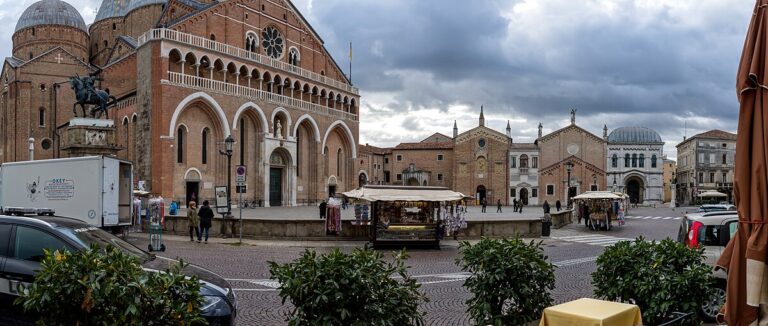


Padua is my city. I was born in a clinic located right near the imposing walls of the Basilica of St. Anthony. I grew up hearing his name, seeing his image, and, for many years, only passing by the outside of that sacred place, never stepping inside. The Basilica was part of the landscape, but not part of my life. Until the day a request changed everything.
The mother of a dear friend, a fervent devotee living in Rome, called me in despair. Tests showed a serious illness in her son, and she asked me to go to the Basilica on her behalf, to make a plea at the Saint’s tomb and get one of the miraculous medals that were distributed in the sacristy. This is the famous Miraculous Medal of St. Catherine Labouré, and its story is so powerful that we will dedicate an exclusive article to it here on the site soon. I, who had never entered there, felt deeply inadequate for a mission of such faith. But I went.
Upon entering, the emotion was overwhelming. I said the prayer she had asked, got the medals for her and her son, and, overcome by a feeling I cannot describe, I also took some for myself and my family. When I touched the cold marble of St. Anthony’s tomb with my hand, the tears flowed uncontrollably. I felt a presence, a strength, and a certainty so profound that I knew, in that instant, that I would never stop believing in the power of his intercession.
My faith became an unshakable certainty a month later when new exams showed that my friend no longer had any spot on his lung, leaving the doctors in disbelief, and so the surgery was canceled. A short time later, I personally accompanied him to the Basilica to give thanks for yet another miracle of healing from the Saint.
That is why today, June 13th, such a special day, I feel the need to celebrate the life and intercession of the Saint of Miracles. Shall we dive into his history, the secrets of his Basilica, and the traditions of Padua that keep his flame alive in the heart of the world?
The Journey from Fernando de Bulhões to St. Anthony of Padua
The story of the Paduan Saint curiously begins more than 2,000 kilometers away, in another nation. Understanding this origin is fundamental to grasping the scope of his legacy.
From Lisbon to the World: The Birth of a Saint
Born in Lisbon around 1195, he was baptized as Fernando de Bulhões. Coming from a noble family with a promising future, Fernando felt a strong religious calling from an early age. He initially joined the Augustinian Canons, where he delved into theological and biblical studies, showing remarkable intelligence and memory.
His life changed dramatically upon encountering the first Franciscan martyrs, whose bodies were transferred to Coimbra, where he lived. Inspired by the simplicity, poverty, and missionary courage of the order recently founded by St. Francis of Assisi, Fernando decided to become a friar minor, adopting the name Anthony.
The Arrival in Padua and the Eternal Legacy in Italy
With the desire to preach the Gospel in Morocco, Anthony set out on a mission, but a severe illness forced him to return. During the voyage back, a storm diverted his ship to the coast of Sicily, Italy. It was the hand of fate that led him to the heart of the Franciscan movement.
In Italy, his immense wisdom, previously kept in humility, was revealed almost by chance when he was asked to preach impromptu. His eloquence and profound knowledge of the Scriptures amazed everyone. Francis of Assisi appointed him the first theology teacher of the order, tasked with training the new friars. His preaching against heresies and in defense of the poor and oppressed made him a legendary figure, until he settled in Padua, the city that welcomed him and where he delivered some of his most powerful sermons. He passed away in 1231, at the age of 36, and his canonization was one of the fastest in history, occurring less than a year after his death. Thus, the Portuguese Fernando became the eternal St. Anthony of Padua.
The Pontifical Basilica: A Monument of Faith, Art, and History
The Basilica, affectionately called “Il Santo” by the locals, is the beating heart of Padua. Its construction began in 1232, right after the canonization, to house the saint’s tomb. Today, it is one of the world’s largest pilgrimage centers.
Architecture that Connects Worlds: From Romanesque to Gothic and Byzantine
The first impression upon seeing the basilica is one of awe. Its architecture is a harmonious and unique fusion of styles. The Romanesque lines of the facade blend with Gothic arches and details, while its eight Byzantine-inspired domes are reminiscent of St. Mark’s Basilica in Venice, giving it an unmistakable silhouette.
This external grandeur is an invitation to discover the treasures it holds, a reflection of the universality of the message of St. Anthony of Padua.

What You Must See Inside the Basilica: An Unmissable Itinerary
The interior of the Basilica of Padua is a museum of sacred art. The high altar is a masterpiece by Donatello, one of the greatest sculptors of the Renaissance. The bronze statues and the crucifix are of a moving expressiveness and beauty.
Be sure to visit the various chapels, each with its own history and art. The Chapel of St. James (Cappella di San Giacomo) is famous for its frescoes by Altichiero da Zevio, and the Chapel of Blessed Luca Belludi, a disciple of Anthony, also holds priceless works of art. Every step inside the sanctuary is an encounter with centuries of devotion.

Albertomos, Public domain, via Wikimedia Commons
The Heart of Devotion: The Tomb and Relics of “Il Santo”
Two points within the basilica concentrate the energy and faith of millions of pilgrims: the tomb where the saint’s body rests and the chapel that holds his most precious relics.
The Saint’s Ark: Where Millions of Faithful Lay Their Prayers
The Chapel of the Ark is the final destination for almost all visitors. There lies the tomb of St. Anthony of Padua, an imposing monument of green marble. The silence in the place is broken only by the whisper of prayers and the gentle sound of hands touching the cold stone.
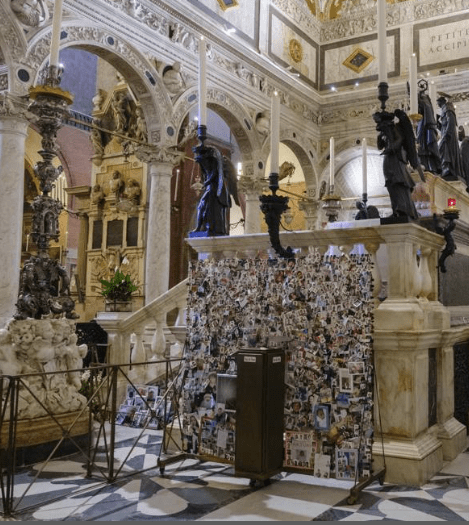
It is a tradition for the faithful from all over the world to touch the tomb, leaving photos, letters, and requests in a gesture of direct connection with the saint. The energy of the place is palpable, a mixture of hope, gratitude, and deep faith that transcends any religion.
The Chapel of the Relics: The Incorrupt Tongue and the Testimony of Faith
Behind the high altar is one of the most impressive sites: the Chapel of the Relics. In gold and silver reliquaries, fragments of the saint’s body are preserved. The most famous are his tongue and vocal apparatus, which were found incorrupt 32 years after his death, a divine sign of his gift as a preacher of the Word of God.
Seeing the intact tongue of St. Anthony of Padua after almost 800 years is a powerful experience, a physical testament to the belief that his message was, and still is, divinely inspired.
The Miracles of St. Anthony: Fame that Crosses Centuries
The saint’s universal fame is intrinsically linked to the miracles of St. Anthony. Although he is popularly known as the saint who helps find lost things, his intercessory power is invoked for the most diverse causes.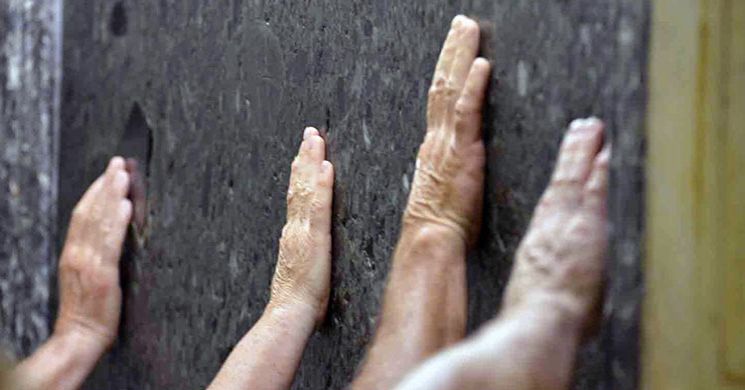
The Healings, the Ex-Votos, and Gratitude on the Basilica’s Walls
Next to the basilica, a room impresses with its quantity of ex-votos. These are paintings, photographs, prostheses, helmets, wedding dresses, and silver objects shaped like hearts, legs, and arms. Each of these items is a “thank you” for a grace received.
These are stories of unexplained healings, of lives saved, and of problems solved, attributed to the intercession of the saint. Walking through this room is like reading a living book on human faith and gratitude, tangible proof of popular devotion.
From “Matchmaker Saint” to Protector of the Poor: The Many Faces of Anthony
In Brazil and Portugal, St. Anthony of Padua is famous for being the “matchmaker saint.” This tradition comes from stories of his help to humble young women in obtaining the necessary dowry for marriage.
Furthermore, he is known as the “Bread of the Poor.” The tradition of “St. Anthony’s bread” consists of giving alms for the purchase of bread for the needy as a thank you for a grace received.
The Living Tradition: The June Procession and the Warmth of Paduan Devotion
The faith in St. Anthony of Padua is not just a relic of the past; it is vibrant and renewed every year, especially during his feast day celebrations.
June 13th: How Padua Celebrates its Saint
June 13th, the day of the liturgical feast, transforms Padua. The city is filled with an atmosphere of celebration and reverence. The highlight is the grand procession, in which a statue of the saint, carrying a relic, is paraded through the historic streets.
Thousands of residents, pilgrims, and tourists follow the procession in one of the most impressive displays of popular faith in Italy. It is an event that unites the city around its spiritual patron.
The Tredicina: The Thirteen-Day Preparation for the Feast
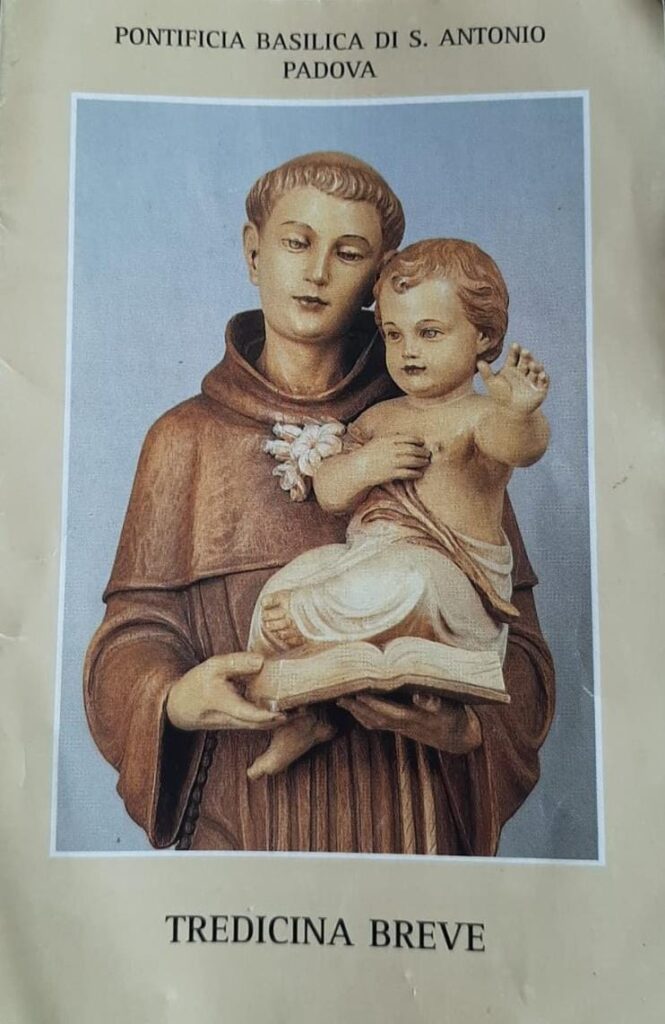
The great feast is preceded by the “Tredicina,” a thirteen-day preparation of special prayers and masses. It is a period of intense devotion, in which the faithful spiritually prepare to celebrate their beloved saint’s day, recalling his virtues and teachings.
Traveler’s Guide: Planning Your Visit to the Basilica of St. Anthony
Visiting this sacred place is an enriching experience. To make the most of it, follow some practical tips.
Opening Hours, Masses, and How to Get There
- Hours: The basilica is generally open every day from 6:20 AM to 7:45 PM. It is always a good idea to check the official website for hours before your visit, as they can change.
- Admission: Entrance to the basilica is free. Donations are welcome for the upkeep of the complex.
- How to Get There: From the Padua train station (Stazione di Padova), you can take a tram or bus that will drop you off near the basilica. A walk through the historic center is also a great option and takes about 20-25 minutes.
Tips for a Respectful and Enriching Visit
- Dress Code: As it is a sacred place, visitors are required to cover their shoulders and knees. Avoid tank tops, short shorts, and short skirts.
- Silence: Maintain silence, especially near the tomb and in the chapels. Many people are there to pray.
- Photography: Generally, non-flash photos are allowed in the main nave but are prohibited in specific areas like the Chapel of the Relics. Please respect the signs.
Why is Anthony Simply “Il Santo” to Italians?
Throughout Italy, especially in the Veneto region, if you mention “Il Santo,” everyone will immediately know you are talking about Anthony. This exclusivity reveals the depth of the relationship between him and the Italian people.
He needs no surname or designation. His presence is so fundamental to the local culture and spirituality that his name has merged with the very definition of sainthood. He is, simply, The Saint.
St. Anthony: The Eternal Flame of Faith in the Heart of Italy
From Fernando de Bulhões in Lisbon to Il Santo in Padua, Anthony’s journey is proof of the transformative power of faith. His life was an example of dedication to the poor, of theological wisdom, and of a miraculous ability to touch people’s hearts.
Visiting the Basilica of Padua is more than a tourist trip; it is a pilgrimage to the heart of a faith that withstands time, materialized in art, testimonies, and a devotion that, almost 800 years later, continues to move crowds and inspire the world.
A Gift from Me to You
There are many prayers to St. Anthony, in every language, from Latin to dialect… But this small and simple prayer is the one that has touched my heart the most, and the one I have been saying for many years.
My beloved St. Anthony, who always protects me, intercede for me before our Lord Jesus Christ,
that He may grant me the grace I desire (mention the grace).
I ask this of you, St. Anthony, for the firm trust I have in God, whom you served faithfully.
I ask this of you for the love of the Child Jesus, whom you held in your arms.
I ask this of you for all the miracles that God has worked and continues to work daily through your intercession.
Amen.
I hope it may bring comfort, graces, and miracles into the lives of each of you who pray it with love, faith, and gratitude.
Visit the official site : https://www.santantonio.org/
Follow the live Masses and images from the Basilica del Santo:
Live streaming of Holy Masses: weekdays at 6:00 PM, and on Sundays and holidays at 11:00 AM and 6:00 PM.
Attribution COVER PHOTO

 ✍️ Idealizadora e autora do Verament...