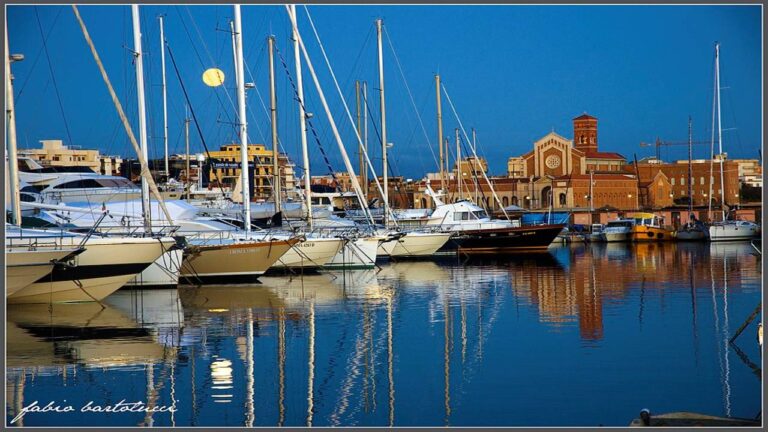


Nestled just 60 kilometers south of Roman grandeur, Nettuno emerges on the Lazio coast not merely as a seaside retreat, but as a portal to the multiple layers of Italian history. Far from the capital’s hustle and bustle, this coastal town offers a rich and complex tapestry woven with threads of ancient legends, medieval valor, Renaissance splendor, and the poignant scars of modern conflicts. Its foundations rest upon the mythical Antium, a city of the Volsci and later a cherished retreat for Roman emperors and orators, whose port, Cenone, likely flourished where the pulsating heart of the medieval borgo stands today. The very choice of the name “Nettuno,” emerging from the ashes of Antium after invasions and the passage of centuries, evokes the power of the sea god, perhaps a plea for protection or an acknowledgment of the intrinsic dependence on the sea that shaped and continues to shape the local identity. Walking through Nettuno is, therefore, more than a simple tourist visit; it’s an immersion in a narrative spanning millennia, where every stone, every alley (vicolo), every wave kissing the shore seems to echo stories of gods, heroes, saints, and soldiers. It is an invitation to slow down, observe, and feel the authentic Italy, which endures and reinvents itself, preserving its soul between past and present.
The Beating Heart: The Borgo Medievale
The Borgo Medievale is the indelible soul of Nettuno, an enchanting labyrinth of narrow, winding vicoli (alleys), stone houses overlooking small squares, and imposing walls with cylindrical towers testifying to the rule of the Orsini family in the 14th century. Dramatically situated on a cliff, this historic district is considered the oldest continuously inhabited area in the region, possibly the site of the ancient port Cenone. Far from being a static museum piece, the Borgo buzzes with daily life: artisan shops, restaurants exuding the aroma of fresh fish, cozy bars, gelaterias, and wine shops (enoteche) invite unhurried exploration, especially as evening falls, when the atmosphere becomes magical. Most of the borgo is pedestrianized, an irresistible invitation to get lost in its alleys, discovering unexpected corners and absorbing the harmonious blend of a deep past and a dynamic present.
Within these ancestral walls, some buildings tell particular stories:
- Palazzo Baronale (Orsini/Colonna): The former seat of feudal power, likely built in the late 14th century by Nicola Orsini. Although now private property, its strategic structure and inner courtyard evoke centuries of history.
- Palazzo Doria-Pamphilj: Erected around 1600, this palace displays a sober facade facing Piazza Colonna and a more articulated one facing the sea. Inside, frescoes by the painter Pier Francesco Mola add an artistic touch.
- Chiesa Collegiata di San Giovanni Battista ed Evangelista: Rebuilt in the 18th century over an earlier medieval church (Santa Maria Assunta), local tradition whispers that the original site might have housed a pagan temple dedicated to Neptune. It holds notable works of art and is a spiritual reference point for the community.
The Renaissance Guardian: Forte Sangallo
Dominating the coast, Forte Sangallo stands as an indelible symbol of Nettuno and a masterpiece of Renaissance military architecture. Built between 1501 and 1503 by order of Cesare Borgia, with the design attributed to Antonio da Sangallo the Elder, its mission was clear: to defend the “granary of Lazio” from pirate and corsair attacks. Its imposing quadrangular structure, with massive bastions and thick walls, rests directly on the cliff, defying the sea and time.
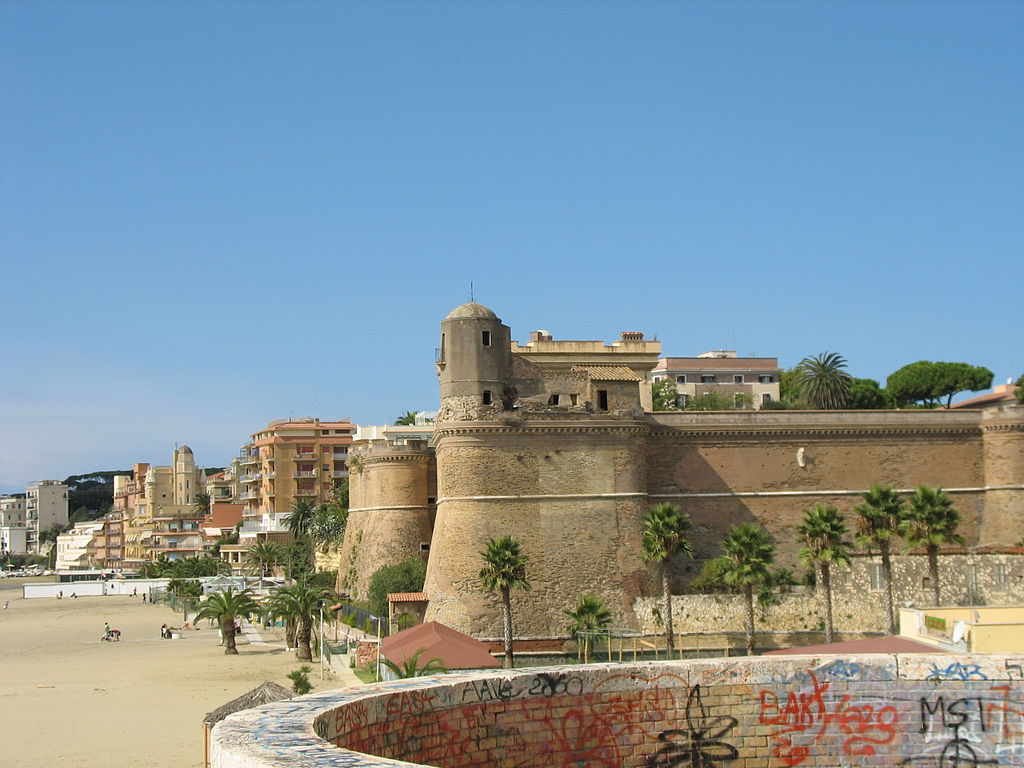
Over the centuries, the fort witnessed the transfer of power – from the Borgia to the Colonna, the Apostolic Chamber, and the Borghese family – and hosted historical events, such as the signing of the Convention of Nettuno in 1925 between Italy and Yugoslavia, in the presence of Benito Mussolini. Acquired by the Municipality in 1997, Forte Sangallo was reinvented as the town’s cultural heart. Today, it houses:
- Museo dello Sbarco Alleato (Allied Landing Museum): Preserves the memory of the Allied landing during the Battle of Anzio in World War II.
- Antiquarium: Displays archaeological finds revealing Nettuno’s ancient roots.
- Cultural Space: A venue for contemporary art exhibitions, conferences, and events that keep its relevance alive.
Forte Sangallo acts as a temporal bridge, connecting the Borgo Medievale to more recent history, a testament to Nettuno’s resilience and adaptability.
Echoes of War and Symbols of Peace: Operation Shingle and the American Cemetery
Nettuno’s serene beauty today starkly contrasts with the drama experienced during World War II. On January 22, 1944, its beaches, along with those of Anzio, became the setting for Operation Shingle, the Allied landing aimed at breaking the German lines and accelerating the liberation of Rome. The operation, though crucial, resulted in a bloody stalemate that lasted for months, and Nettuno paid a heavy price, suffering brutal bombings, evacuations, and destruction.
A silent and powerful testimony to this period is the Sicily-Rome American Cemetery and Memorial. Administered by the American Battle Monuments Commission (ABMC), this vast 77-acre cemetery holds the remains of 7,845 American soldiers (including 12 women) who lost their lives during the liberation of Sicily and the advance through Italy. The white headstones, arranged in gentle arcs on immaculate lawns under Roman pines, create an atmosphere of solemnity and respect.
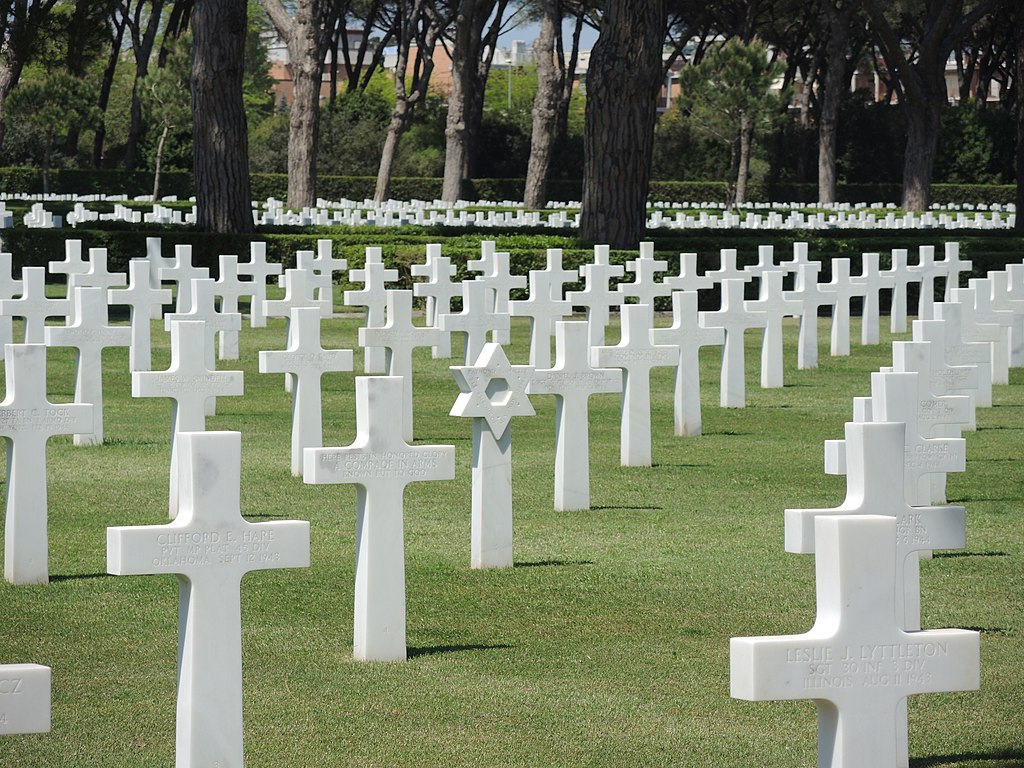
The central memorial includes a chapel, where the names of over 3,000 missing are engraved on white marble, and a map room detailing the military operations. Notable figures like war correspondent Ernie Pyle rest here. Visits by American presidents and Pope Francis underscore the site’s importance as a symbol of memory and reconciliation. Interestingly, the American presence also left an unexpected legacy: the introduction of baseball, which flourished to the point that the Nettuno Baseball Club became a legend in Italian sports.
Faith, Legends, and Celebrations: The Spiritual Soul of Nettuno
Nettuno’s deep spirituality is prominently manifested in the Sanctuary of Our Lady of Graces and Saint Maria Goretti. Located facing the sea, its origins date back to the 16th century, linked to a fascinating legend. It is said that around 1550, a wooden statue of the Virgin, coming from England to escape iconoclastic destruction, miraculously arrived on the coast of Nettuno after a violent storm was calmed by the sailors’ prayers. Since then, Our Lady of Graces (Madonna delle Grazie) became the protector of the city.
The sanctuary also houses, since 1929, the remains of Saint Maria Goretti, the young peasant girl martyred in 1902 and canonized in 1950, whose story of purity and forgiveness attracts countless pilgrims. The crypt where she rests is a place of intense devotion.
This vibrant faith overflows into annual celebrations:
- Festa della Madonna delle Grazie (May): The city’s main event, featuring the emotional “Rievocazione dell’Approdo” (Reenactment of the Landing) on the beach, followed by solemn processions carrying the statue of the Virgin between the Collegiate Church and the Sanctuary, culminating in fireworks over the sea. The city is adorned with lights (luminarie) and festivities, with food stalls and music.
- Nettuno Wine Festival (September): A celebration of local wine, especially the Cacchione di Nettuno DOP, transforming the historic center into a tasting route.
- Festa di San Rocco (August 16th): Homage to the ancient patron saint, whose statue is also said to have arrived in the legendary landing.
These festivals, deeply linked to founding legends and local products, offer an authentic window into Nettuno’s cultural soul.
Flavors of Sea and Land: The Gastronomic Signature
Nettuno’s cuisine reflects its privileged location, with the Tyrrhenian Sea dictating many of the flavors. While sharing the robustness of Lazio cuisine, based on fresh, seasonal ingredients (cucina povera), the focus naturally shifts to seafood. Expect excellent fresh fish dishes, pasta alla pescatora (seafood pasta), fritti di mare (fried seafood), and the tempting aroma of grilled fish perfuming the streets of the Borgo. Regional dishes like Vignarola (spring vegetable stew) might also make an appearance.
Here is a list of just some of Nettuno’s wonderful restaurants — there’s something for every taste.
La Maldita
Rating: 9.4/10 (TheFork)
Cuisine: Known for high-quality meats and creative twists on classics, like the “Cursed Carbonara”. Modern atmosphere, considered a gourmet and trendy spot.
Hours (approx.): Tue-Wed: 7:30 PM–2:00 AM; Thu-Sun: 12:30 PM–3:00 PM and 7:30 PM–2:00 AM
Romolo al Borgo
Rating: 9.3/10 (TheFork) / Google reviews praise excellent food and ambiance
Cuisine: Specializes in fresh fish and local/regional dishes. Creative starters (like the “anchovy and burrata cappuccino”) and catch of the day. Elegant, modern venue in the heart of the old town (Piazza Mazzini), with a good selection of local wines (e.g., Cacchione).
Hours (approx.): Usually open for lunch (e.g., 12:00 PM–3:30 PM) and dinner (e.g., 7:30 PM–11:30 PM)
Ristorante Dal Folle Spadaro 1974
Rating: Not listed on TheFork / Google reviews highlight great food and warm service
Cuisine: Italian and seafood cuisine, with a strong focus on local fish from Anzio/Nettuno. Creative appetizers, homemade pasta, and desserts made by the owner’s son. Warm and friendly atmosphere (owner Roberto is known for his cheerful personality), located in Piazza Marcantonio Colonna, with outdoor seating.
Hours (approx.): Lunch (e.g., 12:00 PM–3:00 PM) and Dinner (e.g., 7:30 PM–11:00 PM), closed on Wednesdays
Mastro Arrosticino & Cucina tipica romana
Rating: 8.8/10 (TheFork) / Google reviews praise value for money
Cuisine: Authentic Roman and Abruzzese cuisine. Main specialty: arrosticini (grilled mutton skewers typical of Abruzzo), plus hearty traditional dishes. Excellent quality/price ratio.
Hours (approx.): Lunch (e.g., 1:00 PM–3:00 PM) and Dinner (e.g., 7:30 PM–11:00 PM), also open on Mondays and Tuesdays
Zero Miglia
Rating: 8.7/10 (TheFork) / 4.4/5 (Google – 1,200+ reviews)
Cuisine: Fresh seafood (known as the “Fish Boutique”) with a modern and creative touch, including desserts (e.g., made with liquid nitrogen). Trendy, vibrant place in Piazza Guglielmo Marconi. Often full, booking recommended.
Hours (approx.): Lunch (e.g., 12:00 PM–3:00 PM) and Dinner (e.g., 7:30 PM–10:00 PM)
Glam Drinks and Food
Rating: 9.3/10 (TheFork)
Cuisine: Roman and Italian dishes served in a casual bar/pub-style setting. Ideal for aperitivo or light meals.
Hours (approx.): Usually open evenings (e.g., 8:00 PM–10:00 PM), closed on Mondays
In Mezzo al Mare
Rating: 9.2/10 (TheFork) / Google reviews highlight view and seafood quality
Cuisine: Seafood-focused with attention to fresh catch from Anzio and homemade pasta such as Casarecce with shrimp cream and Pappardelle with octopus ragù. Prime location on the seafront with outdoor seating.
Hours (approx.): Lunch (e.g., 12:30 PM–3:15 PM) and Dinner (e.g., 7:30 PM–10:00 PM) Sat–Sun; Lunch only Mon–Tue (12:30 PM–3:15 PM)
La Bussola Ristorante Pizzeria
Rating: 8.8/10 (TheFork) / Google praises pizza and friendly staff
Cuisine: Traditional pizzeria well-regarded for its dough and toppings. Also offers “crazy” sandwiches and set menus with good value. Cozy atmosphere and courteous service. Sometimes hosts dinner shows.
Hours (approx.): Lunch (e.g., 12:30 PM–3:00 PM) and Dinner (e.g., 7:00 PM–11:00 PM), Tuesday to Sunday
Trattoria Pizzeria La Campana
Rating: 9.0/10 (TheFork) / Google reviews mixed on service but positive on food
Cuisine: Mediterranean cuisine and traditional trattoria-style pizzeria. Dishes like Fettuccine with porcini mushrooms, Burrata-filled ravioli, Parmigiana, and pizzas. Considered a gourmet/trendy restaurant by TheFork.
Hours (approx.): Lunch (12:00 PM–3:00 PM) Tue–Sun; Dinner (Tue–Sun, specific times to be confirmed)
Salsedine
Rating: 8.5/10 (TheFork) / Google highlights raw seafood and location
Cuisine: Fresh seafood located directly in the tourist harbor. Known for high-quality raw selections, seasonal starters, and classics like Spaghetti with clams. Outdoor tables with view of the boats.
Hours (approx.): Lunch (e.g., 12:00 PM–3:00 PM) Wed–Thu; Lunch and Dinner (e.g., 12:00 PM–3:00 PM, 7:30 PM–10:00 PM) Fri–Sun
Pinseria Blanco Wine Bar (Pizzeria)
Rating: 9.3/10 (TheFork) / Google reviews praise the pinsa and vibe
Cuisine: Specializes in Roman-style pinsa, a lighter, crunchier pizza alternative. Also functions as a wine bar, great for pairings. Located in the charming Piazza Marcantonio Colonna, heart of the medieval town, with outdoor seating.
Hours (approx.): Usually open evenings (e.g., 8:00 PM–10:00 PM), Tuesday to Sunday
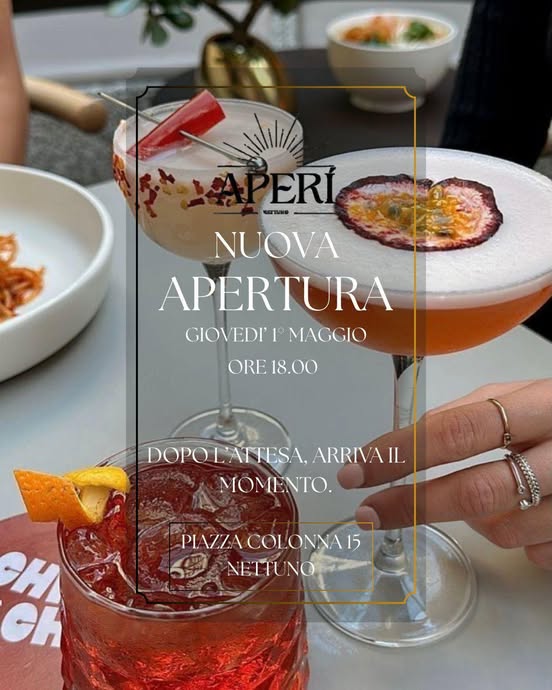
By the way, right as we write this article, in the heart of the Borgo in Nettuno, at Piazza Colonna, a new venue has just opened — and it promises to become a truly special spot for meeting and tasting.
It’s called Aperí, offering both “Aperipranzo” and “Apericena”: local fresh seafood crudo, boards of Tuscan cured meats and cheeses, quality cocktails and wines, artisanal fresh fried snacks, and homemade desserts. We’ll soon speak with the owner, Valter Casali, to learn more.
In the meantime, if you’re in Nettuno or visiting the town, take the chance to stop by — and let us know what you think!
The ‘Cacchione di Nettuno DOP’
However,we cannot forget Nettuno’s gastronomic ambassador, a true signature: the white wine Cacchione di Nettuno DOP. Produced exclusively from the native Cacchione grape (also known as Bellone), whose origins may date back to Roman times, this wine establishes a liquid link between the city’s present and ancient past. With its straw-yellow color, complex fruity and floral aromas, and a fresh, balanced, persistent palate, often with a saline note reminiscent of the sea, Cacchione is the perfect pairing for local fish and seafood dishes. Served chilled, it is also an excellent aperitif. Discovering Cacchione means tasting the essence of Nettuno’s terroir.
Visit the Wineries
Casa Divina Provvidenza
Cantina Bacco
Beyond the Center: Torre Astura and Other Charms
The exploration of Nettuno does not end in its historic center. Venturing a bit further, other treasures are discovered:
- Torre Astura: South of Nettuno, this fascinating medieval fortress rises from the ruins of a Roman villa, connected to the mainland by an arched bridge. Its austere beauty, surrounded by a pine forest and a wild beach, inspired writers like Gabriele D’Annunzio. However, its location within a military firing range restricts access, usually permitted only during the summer months (July-September), making the visit an exclusive experience that requires planning.
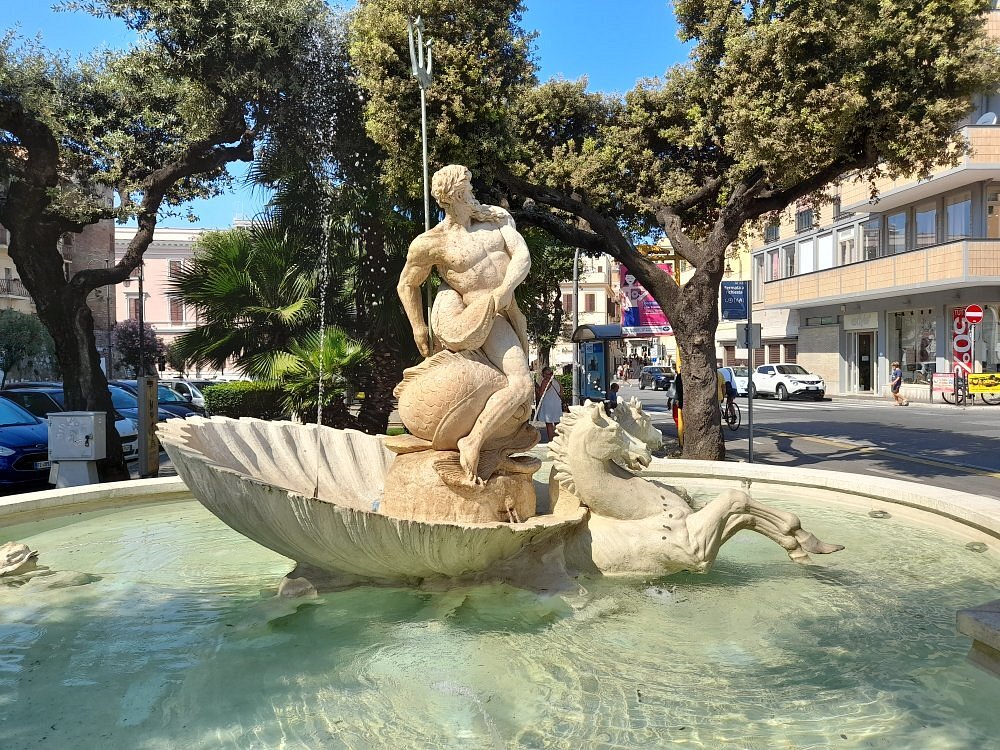
- Fontana del Dio Nettuno: In the central Piazza Mazzini, this 19th-century travertine fountain honors the god who gave the city its name, featuring Neptune on a shell pulled by seahorses.
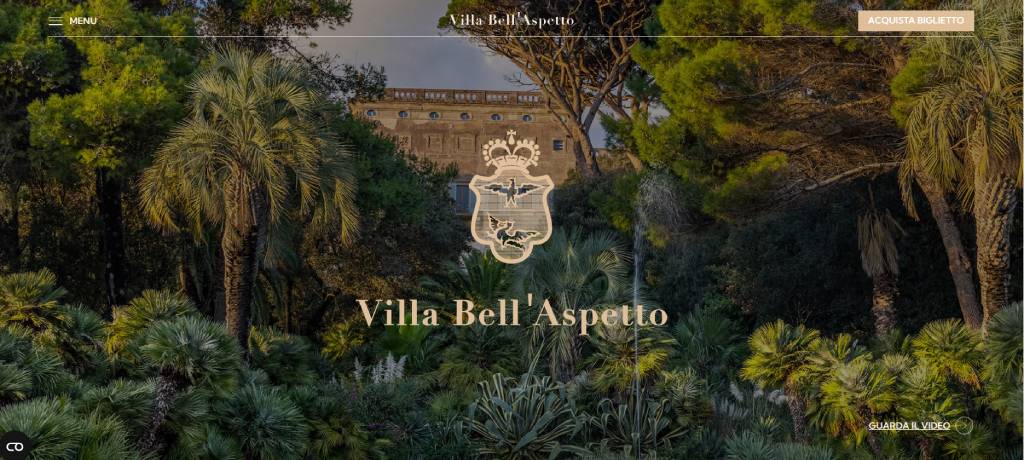
- Villa Borghese Bell’Aspetto: A vast park overlooking the sea, in the transition area towards Anzio, believed to have been the acropolis of ancient Antium and host to D’Annunzio. It offers a green refuge with panoramic views.
Practical Tips for Your Adventure
How to Get There
The most practical way from Rome is by direct regional train from Termini station to Nettuno. The journey takes about 1h 10min and is inexpensive. By car, the trip takes about 1 hour via the SS148 Via Pontina, but traffic and parking can be challenging.
Where to Stay
Nettuno and Anzio offer a wide range of accommodations, from hotels to charming B&Bs, guesthouses, and apartments. It’s possible to stay in the Borgo, facing the sea, or in quieter areas. Book in advance, especially in summer.
Getting Around
Nettuno’s center is compact and ideal for exploring on foot. Wear comfortable shoes. Local buses serve more distant areas.
When to Go
Nettuno enjoys a Mediterranean climate. For the beach, the ideal time is from late June to early September. For general tourism with pleasant weather and fewer crowds, the shoulder seasons (May-June and September-October) are excellent.
Nettuno, A Pearl Waiting to Be Discovered
Nettuno transcends the definition of a simple coastal town; it is a microcosm of Italian historical and cultural richness, a place where the past constantly dialogues with the present in a serene Mediterranean setting. From the legacy of Antium to the charm of the Borgo Medievale, from the grandeur of Forte Sangallo to the memories of war and resilient faith, every corner tells a story. The experience is enriched by the authentic flavors of the sea, crowned by the distinct Cacchione wine, and by the vibrant traditions that animate its squares and streets.

Whether for history buffs, sun and sea lovers, cultural explorers, or food enthusiasts, Nettuno offers an authentic and multifaceted experience, far from the beaten path. It is an invitation to slow down, feel the Tyrrhenian breeze, get lost in its ancient alleys, and discover an Italy that jealously guards its soul.

 ✍️ Idealizadora e autora do Verament...